
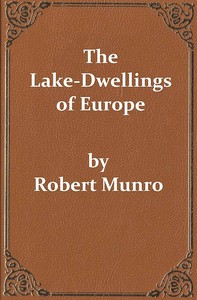
The Lake-Dwellings of Europe by Robert Munro
Picture Europe, but not the one of cathedrals and cobblestones. Go further back, to a time after the last Ice Age, when forests were thick and mysterious. In the calm waters of alpine lakes, from Switzerland to Scotland, communities did something extraordinary: they built entire villages on wooden platforms over the water. For centuries, these 'lake-dwellings' were just a local legend, until drought and low water levels in the 1850s began to expose ancient wooden posts sticking out of the mud.
The Story
This isn't a story with a plot in the usual sense. It's the story of a discovery. Robert Munro acts as our guide through the mounting evidence. He gathers reports from across the continent, detailing what was found: stone axes, clay pottery, bone tools, and the very timbers of the houses themselves. The book walks us through the big debate: were these homes built over the water for defense, or were they on the shores and later submerged? Munro sifts through the findings, analyzing the tools and the layout of the posts to build a picture of daily life. He shows us how these people farmed, fished, crafted, and lived together, creating a surprisingly clear snapshot of a society that left no written records.
Why You Should Read It
What grabbed me was the sheer everyday magic of it. This isn't about treasure hoards; it's about a child's toy, a broken cooking pot, or a well-made fishing net. Munro's writing, while detailed, carries a genuine excitement. You feel like you're right there with him, brushing the dirt off a find that hasn't been touched for 3,000 years. It makes the distant past feel immediate and human. These weren't mythical 'cavemen'—they were clever engineers and farmers who solved the problems of their time in an ingenious way.
Final Verdict
This is a classic for a reason. It's perfect for anyone with a curiosity about how we piece together history before written words, or for fans of quiet, real-life mysteries. If you enjoy shows about archaeology or love the idea of history being found in your own backyard (or lake), you'll get a kick out of this. Fair warning: it's an older academic work, so some parts are dense with lists of artifacts. But push through those sections, and you'll find a compelling narrative about one of archaeology's first great puzzles. It’s a foundational text that invites you to look at a still lake and imagine the vibrant community that might have once lived upon it.
The copyright for this book has expired, making it public property. Enjoy reading and sharing without restrictions.
Matthew Wilson
2 months agoI found the author's tone to be very professional yet accessible, the formatting on mobile devices is surprisingly crisp and clear. The price-to-value ratio here is simply unbeatable.
George White
1 year agoAs a long-time follower of this subject matter, the historical context mentioned in the early chapters is quite enlightening. It definitely lives up to the reputation of the publisher.
Jessica White
8 months agoI appreciate the objective tone and the evidence-based approach.
Kimberly Moore
8 months agoBefore I started my latest project, I read this and the language used is precise without being overly academic or confusing. I'll be recommending this to my students and colleagues alike.







Kimberly Garcia
6 months agoAfter a thorough walkthrough of the table of contents, the way the author breaks down the core concepts is remarkably clear. I am looking forward to the author's next publication.