
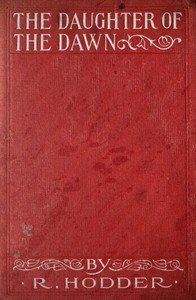
The daughter of the dawn : A realistic story of Maori magic by Hodder
Let me tell you about this hidden gem I found. William Reginald Hodder wrote 'The Daughter of the Dawn' back in the early 1900s, and reading it feels like uncovering a time capsule. It's a story deeply rooted in a specific, turbulent moment in New Zealand's history.
The Story
The plot follows our protagonist, a young woman of mixed Māori and European heritage. She grows up feeling like she doesn't fully belong in either community. From her Māori family, she inherits a deep understanding of the land, its stories, and its spiritual practices—what the settlers might dismiss as 'magic.' From her Pākehā father, she gets an education and a view into the new, rapidly changing colonial society. The conflict arises as these two worlds become increasingly hostile. Land disputes, cultural misunderstandings, and outright prejudice force her to make impossible choices. Can she honor her mother's legacy and the 'old ways' while surviving in her father's world? The tension is quiet but constant, built on family loyalty, cultural erosion, and a fight for personal identity.
Why You Should Read It
What struck me most was how realistic the 'magic' feels. Hodder doesn't treat it like a superpower. It's woven into daily life—knowledge of healing plants, interpreting dreams, understanding the messages in nature. Seeing this through the eyes of a character who is desperately trying to preserve it gives the whole book a quiet, aching heart. She isn't a warrior in a big battle; she's someone trying to keep a flame alive in a strong wind. Her internal conflict is so relatable. Haven't we all felt pulled between different parts of ourselves, or between tradition and progress?
Final Verdict
This book is perfect for readers who love historical fiction that focuses on character and cultural collision over sweeping battles. If you enjoyed the feel of books like 'The Last Runaway' by Tracy Chevalier or 'The Poisonwood Bible,' where personal identity clashes with a larger historical force, you'll connect with this. It's also a fascinating read for anyone curious about Māori perspectives from this era, written by a Pākehā author who was clearly an observer of his time. Be prepared for a slower, thoughtful pace—it's a character study that stays with you. Just a heads-up, the language and some attitudes are very much of its period, so read it as the historical document it is, with all the complexity that entails.
There are no legal restrictions on this material. You can copy, modify, and distribute it freely.
David Davis
10 months agoI started reading this with a critical mind, it manages to maintain a consistent flow even when discussing difficult topics. An excellent example of how quality digital books should be formatted.
Charles Garcia
10 months agoBefore I started my latest project, I read this and the way it handles controversial points with balance is quite professional. Top-tier content that deserves more recognition.
Linda Garcia
7 months agoThis work demonstrates a clear mastery of contemporary theories.
Matthew Lopez
4 months agoI decided to give this a try based on a colleague's recommendation, the step-by-step breakdown of the methodology is extremely helpful for students. Definitely a five-star contribution to the field.



Charles Anderson
8 months agoThis digital copy caught my eye due to its reputation, the level of detail in the second half of the book is truly impressive. The price-to-value ratio here is simply unbeatable.