About 431 minutes
The Fugitives: The Tyrant Queen of Madagascar — Themes and Context
Young Readers Enchanted Adventures
99,083 recorded words. 18 minutes difference from this book's estimate.
View Gutenberg source #23263
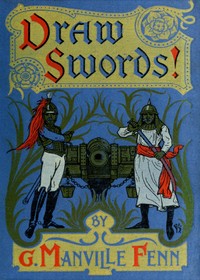
The catalog record for Draw Swords! In the Horse Artillery — Story, Setting & Ideas provides practical reading context through 103,125 words, 7 hr 29 min estimated reading time, and 44 detected text sections.
The text analysis averages about 16.4 words per sentence, while the detected sections provide another way to judge how the source is divided.
Project Gutenberg metadata also associates the work with “India -- Juvenile fiction,” connecting these edition facts with the source record’s subject description.
Explore this collection
These alternatives are selected using recorded categories and estimated reading time.
About 431 minutes
Young Readers Enchanted Adventures
99,083 recorded words. 18 minutes difference from this book's estimate.
View Gutenberg source #23263About 378 minutes
Young Readers Enchanted Adventures
86,834 recorded words. 71 minutes difference from this book's estimate.
View Gutenberg source #25870About 354 minutes
Young Readers Enchanted Adventures
81,242 recorded words. 95 minutes difference from this book's estimate.
View Gutenberg source #37254Search stored excerpts and compare books → Choose by your preferences →
Choices use stored catalog measurements. Estimates vary with reading speed. A shared category is a catalog label, not a claim that two books have the same argument or literary quality.
Search reads excerpt text stored with this catalog and links to its associated Gutenberg record. The connection is stored in the site database; this tool does not recheck that every excerpt is word-for-word identical to that external record. Excerpt search does not cover every chapter and does not verify historical publication dates.
Catalog snapshot checked: 2026-09-25. Coverage: 99 public books, 99 available source excerpts.
Calculated from edition completeness, EPUB availability, text structure and catalogue metadata. Not a user rating.
Total of 100 points, scaled to a 2.5-5.0 range. Editions with an empty description or a missing EPUB file are not scored.
Public-domain source text
The source text is kept in the dedicated reader, separate from this catalogue record and its commentary.
The novel opens not with a skirmish but with a quarrel among young officers in the veranda of the Roumwallah Cantonments, where Richard Darrell, a boy of seventeen, is accused of being a “regular pet” of Sir George Hemsworth. The setting—the headquarters of the East India Company’s artillery in northern Bengal—is established through overheard complaints and the narrator’s dry remark that it was “over sixty years ago,” when boys trained at the Company’s college near Croydon were sent to India. This initial scene of petty jealousy and favouritism immediately signals that the story will balance military action with the social dynamics of a colonial outpost.
The narrative moves in a distinct pattern: from the confined, gossipy spaces of the officers’ quarters to the open, violent plain. Chapter I’s veranda dispute gives way to a series of episodes that test the young protagonist’s pluck—first through riding drills, then through a royal dinner-party, and finally into the chaos of battle. The transition is abrupt but deliberate; the reader is thrust from the heat of a verbal quarrel into the heat of grape-shot and tulwars. This alternation between interior social friction and exterior military crisis creates a rhythm that keeps the story taut. The battle scenes themselves are described with a focus on mechanical precision: the guns fire in sequence, “number one belched forth its little storm of grape; number two followed; and before number six had been fired, number one was ready again.” The repetition of the phrase “there was a yell of rage, and they tore on faster” (used twice in the excerpts) underscores the relentless, almost mechanical nature of the charge and the artillery’s response.
Throughout the excerpts, sensory details recur with insistence. The sun of India is mentioned early—“pretty well tanned by the sun of India”—and the heat is a constant presence, whether in the veranda or on the field. The battlefield is described as a “great plain” dotted with fallen and galloping horsemen, and the dust and smoke of the guns obscure vision. Steel appears in multiple forms: the “keen tulwars” of the enemy, the “blade of a tulwar” that falls quivering on marble, and the implied swords of the title. These images are not merely decorative; they tie the physical environment to the threat of violence. The contrast between the orderly gleam of British artillery and the curved, exotic blades of the Indian horsemen reinforces the cultural opposition that runs through the story. Even in the palace, the marble floor becomes a stage for a sudden, deadly confrontation.
Dialogue is used sparingly but effectively to distinguish characters and to convey the tension between official discipline and personal loyalty. The opening chapter is almost entirely dialogue, with the anonymous voices of the accusers (“Oh, I say, what a jolly shame!”) setting the tone of resentment. Later, Wyatt’s speech is clipped and professional: “Well done, us, Dick! I think we may call this the Battle of Palm Tope, and say we’ve won.” His words mix camaraderie with a dry, almost ironic naming of the engagement. Sergeant Stubbs, left in command, speaks in a more colloquial, wary register: “I can’t help thinking that if you had been worsted they would have attacked us. Not that they would have had much satisfaction out of that.” These voices, along with the men’s silent endurance after the battle (“Any man want to fall out?”—no one answers), create a sense of a tight-knit unit under strain. The dialogue does not explain motives; it reveals them through tone and implication.
After the open field of battle, the narrative shifts to the confined spaces of the Rajah’s palace. Chapter titles such as “In the Labyrinth” and “Robbery” signal a change from linear military action to a more intricate, almost maze-like plot. The palace becomes a space of suspicion and hidden threats: the gates are “close shut,” the guard is ready to challenge, and armed men hang about. The movement here is not the thundering charge of cavalry but the cautious step of soldiers through corridors and courtyards. The contrast between the plain—where discipline and skill triumph over “brute force”—and the palace—where enemies may be disguised as allies—introduces a different kind of tension. The reader, like the soldiers, must navigate a world where the rules of engagement are less clear. This shift in setting and pace is a structural feature of the novel, moving from the clarity of battle to the ambiguity of court intrigue.
Readers approaching Draw Swords! In the Horse Artillery should attend to the way George Manville Fenn uses physical movement—from veranda to battlefield to palace—to shape the story’s emotional arc. The recurring images of heat, steel, and disciplined firepower are not merely atmospheric; they are the means by which the novel explores themes of loyalty, courage, and the cost of empire. The incomplete excerpts leave the full resolution uncertain, but the pattern of scene and image offers a reliable guide to the author’s method.
Reading Draw Swords! again, I found myself lingering on the heat—that heavy, palpable stillness between the dust of cantonment and the sudden crack of action. It’s a rhythm I remember from Trading — Edition Insights, where the quiet patience of an editor mirrors that same tense, held breath before a scene turns. Both feel like waiting for the drum to sound.
Your answers remain private and are stored only in this browser.