About 167 minutes
Mistress Margery — Story, Setting & Ideas
Young Readers Enchanted Adventures
38,234 recorded words. 2 minutes difference from this book's estimate.
View Gutenberg source #23187
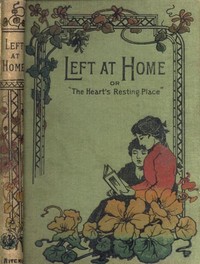
The source record for Left at home — A Reader’s Guide measures this digital text at 38,845 words, 2 hr 49 min estimated reading time, and 5 detected text sections.
The text analysis averages about 18.5 words per sentence, while the detected sections provide another way to judge how the source is divided.
Project Gutenberg metadata also associates the work with “Christian life -- Juvenile fiction,” connecting these edition facts with the source record’s subject description.
Explore this collection
These alternatives are selected using recorded categories and estimated reading time.
About 167 minutes
Young Readers Enchanted Adventures
38,234 recorded words. 2 minutes difference from this book's estimate.
View Gutenberg source #23187About 183 minutes
Young Readers Enchanted Adventures
41,968 recorded words. 14 minutes difference from this book's estimate.
View Gutenberg source #21794About 153 minutes
Young Readers Enchanted Adventures
35,019 recorded words. 16 minutes difference from this book's estimate.
View Gutenberg source #21464Search stored excerpts and compare books → Choose by your preferences →
Choices use stored catalog measurements. Estimates vary with reading speed. A shared category is a catalog label, not a claim that two books have the same argument or literary quality.
Search reads excerpt text stored with this catalog and links to its associated Gutenberg record. The connection is stored in the site database; this tool does not recheck that every excerpt is word-for-word identical to that external record. Excerpt search does not cover every chapter and does not verify historical publication dates.
Catalog snapshot checked: 2026-09-25. Coverage: 99 public books, 99 available source excerpts.
Calculated from edition completeness, EPUB availability, text structure and catalogue metadata. Not a user rating.
Total of 100 points, scaled to a 2.5-5.0 range. Editions with an empty description or a missing EPUB file are not scored.
Public-domain source text
The source text is kept in the dedicated reader, separate from this catalogue record and its commentary.
The opening scene of Left at Home does not begin with a lesson in Christian conduct, but with a boy's hunger and worry. Arthur, rushing upstairs, is stopped by a servant: his baby sister Mildred is ill, the doctor is above, and he must wait in the library. The frosty night, the blazing fire, the snowy table-cover—these domestic details anchor the story in sensory, everyday life. The catalog subjects list 'Christian life' and 'Children – Religious life' as primary themes, yet the first chapter's tension is not doctrinal but emotional: Arthur's struggle to obey his mother's injunction, his weariness, and his falling asleep on the rug. The religious framework emerges gradually, embedded in a mother's letter rather than in direct instruction.
The most sustained religious passage in the excerpts is not a sermon but a letter from Arthur's mother, written aboard ship to India. Her voice is intimate and concrete: she describes rough weather, sea-sickness, the 'creaking and straining noises' of the steamer, and her relief that Arthur is safe on land. The letter's piety is woven into physical detail—'the stars that look down on you in your peaceful English home'—and into the mother's own vulnerability. She tells Arthur she has submitted to God's will, but the submission is framed as a choice made from love, not duty. The catalog subject 'Children – Religious life' is present, but the excerpts show religion as a relationship expressed through a parent's longing, not a set of rules.
The narrative repeatedly returns to the act of waiting. Arthur waits in the library for news of his sister; later, he waits for letters from his parents. The prose slows to match his stillness: 'One half hour and then another passed, and no sound came to break the stillness.' This patience is not presented as a moral achievement but as a difficult, almost physical burden. The catalog subject 'Children – Conduct of life' might imply a didactic focus on behavior, but the excerpts emphasize interior experience—Arthur's temptation to creep upstairs, his 'very grave expression,' his wish that his mother would come. The conduct being shaped is not outward obedience but an inner discipline of trust, learned through absence.
Ashton Grange is described with care: the crimson carpet, the bright fire, the snowy table-cover. These details create a haven of comfort, yet the house is also a place of separation. The mother writes of 'the old home' from which Arthur is now parted, and the contrast between the warm English interior and the 'broad, wide ocean' is sharp. The catalog subject 'Home – Juvenile fiction' is accurate, but the excerpts complicate the idea of home. For Arthur, home is both the physical Grange and the absent presence of his parents. The narrative uses setting to externalize emotion: the frosty night, the quiet house, the letter read by firelight. Home is not a stable refuge but a place where love is felt through memory and hope.
Readers approaching Left at Home through its catalog subjects may expect a straightforward moral tale. The excerpts suggest a more nuanced work, one that uses a child's limited perspective to explore themes of separation, trust, and the slow work of waiting. Pay attention to the physical details—the fire, the letter, the silence—as they carry much of the emotional weight. The religious language is present, but it is always tied to a specific, human voice.
Some evenings I think of Arthur at Ashton Grange, all that childhood watchfulness. It reminds me of another kind of waiting, the young man in The Boy Broker; Or, Among the Kings of Wall Street — A Closer Reading, who also stands alone in a world of adult transactions. Both stories feel less like adventure and more like a quiet holding of breath.
Answer a few questions and save a private reflection on this device.