About 225 minutes
'Me and Nobbles' — Reading Companion
Young Readers Enchanted Adventures
51,586 recorded words. 1 minutes difference from this book's estimate.
View Gutenberg source #22290
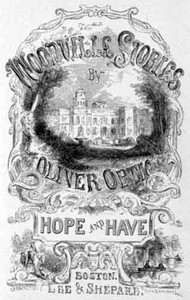
The source record for Hope and Have; or, Fanny Grant Among the Indians: A Story for Young People — Background and Themes measures this digital text at 51,332 words, 3 hr 44 min estimated reading time, and 6 detected text sections.
The text analysis averages about 15.9 words per sentence, while the detected sections provide another way to judge how the source is divided.
Project Gutenberg metadata also associates the work with “Orphans -- Juvenile fiction,” connecting these edition facts with the source record’s subject description.
Explore this collection
These alternatives are selected using recorded categories and estimated reading time.
About 225 minutes
Young Readers Enchanted Adventures
51,586 recorded words. 1 minutes difference from this book's estimate.
View Gutenberg source #22290About 222 minutes
Young Readers Enchanted Adventures
50,937 recorded words. 2 minutes difference from this book's estimate.
View Gutenberg source #21416About 220 minutes
Young Readers Enchanted Adventures
50,426 recorded words. 4 minutes difference from this book's estimate.
View Gutenberg source #21451Search stored excerpts and compare books → Choose by your preferences →
Choices use stored catalog measurements. Estimates vary with reading speed. A shared category is a catalog label, not a claim that two books have the same argument or literary quality.
Search reads excerpt text stored with this catalog and links to its associated Gutenberg record. The connection is stored in the site database; this tool does not recheck that every excerpt is word-for-word identical to that external record. Excerpt search does not cover every chapter and does not verify historical publication dates.
Catalog snapshot checked: 2026-09-25. Coverage: 99 public books, 99 available source excerpts.
Calculated from edition completeness, EPUB availability, text structure and catalogue metadata. Not a user rating.
Total of 100 points, scaled to a 2.5-5.0 range. Editions with an empty description or a missing EPUB file are not scored.
Public-domain source text
The source text is kept in the dedicated reader, separate from this catalogue record and its commentary.
The opening chapters of Hope and Have introduce Fanny Grant as a “very naughty girl” who steals money from a drawer in Mr. Grant’s closet. The narrative voice is direct and moralizing, with chapter titles like “Thou shalt not steal” signaling the didactic intent. The early action centers on Fanny’s flight to New York, where she spends the stolen money and encounters a sick girl whose patient suffering prompts her first pangs of conscience.
Oliver Optic, the pen name of William T. Adams, frames the story as part of his Woodville series, dedicating it to a young friend. The preface explicitly states the moral: “what we most desire, in moral and spiritual, as well as worldly things, we labor the hardest to obtain.” This truism, adopted by Fanny as her motto “Hope and Have,” drives the narrative’s arc from wrongdoing to reformation.
The first chapter, titled “The Naughty Girl,” wastes no time in establishing Fanny’s character. She is described as having been “very naughty” and is caught stealing money from a closet drawer. The constable, Mr. Long, brings her back to Mr. Grant’s house, but Fanny insists she came of her own accord: “I came home as soon as I could; and I did not wish you to find me till I had done what I had to do.” This early dialogue reveals a girl who is both defiant and self-aware, already planning her return.
Mr. Grant’s reaction is notably restrained. He is “very sad, but very stern,” and when Fanny bursts into tears, he does not immediately forgive her. Instead, he asks pointed questions about the stolen money and her whereabouts. The scene is tense, with the constable’s officiousness contrasting with Mr. Grant’s quiet authority. Fanny’s confession is detailed: she admits to spending most of the money and expresses willingness to be punished. This moment marks the first step in her moral journey, as she shifts from evasion to accountability.
In the excerpt where Fanny recounts her adventures, the narrative slows to allow a full confession. She tells Mr. Grant how she “let the cat out of the drawer” and discovered the money’s hiding place. The phrase “letting the cat out” is a literal and figurative revelation—she exposes both the hidden cash and her own deceit. Fanny’s story includes her encounter with Mrs. Kent and the sick girl, whom she helped by paying rent with a hundred dollars of the stolen money.
Mr. Grant’s reaction is telling: “a slight smile gathered upon his sad face” when he hears of this charitable act. The author uses this moment to suggest that good can emerge from evil, a theme echoed in the chapter title “Good out of Evil.” Fanny’s singing of hymns to the sick girl further underscores the religious and moral framework. The confession is not just a plot device but a structural pivot, moving the story from transgression toward redemption.
The latter half of the novel shifts dramatically to the “terrible Indian massacre which occurred in Minnesota, in 1862,” as the preface notes. This historical event provides the foundation for Fanny’s adventures “among the Indians.” The excerpts do not detail the massacre itself, but the chapter titles indicate a progression: “The Indian Massacre,” “The Indian Boy,” “The Young Exiles,” and “The Night Attack.”
Optic draws on “authentic sources” for these incidents, though he acknowledges that Fanny’s experience is “tame compared with that of hundreds who suffered.” The inclusion of a historical tragedy in a children’s moral tale is notable; it grounds the story in real peril rather than purely domestic lessons. The Indian boy mentioned in the chapter list and the illustration caption (“The Capture of the Indian Boy”) suggests a cross-cultural encounter, though the excerpts do not reveal its outcome.
The book’s structure follows a clear arc: Fanny’s fall (theft and flight), her turning point (the sick girl’s influence), her return and confession, and then a new set of challenges in the Minnesota wilderness. The preface explicitly states that the story is “not an illustration of the ‘pleasures of hope’” but rather a demonstration that desire leads to effort. The motto “Hope and Have” encapsulates this pragmatic optimism.
Optic’s prose is straightforward, with short chapters and frequent moral commentary. The dialogue often carries the lesson, as when Fanny says, “I have been very wicked and ungrateful to you.” The author avoids ambiguity: characters are clearly good or erring, and events are designed to instruct. The shift from domestic drama to frontier adventure midway through the book may surprise readers expecting a purely domestic tale, but it aligns with the period’s interest in Indian captivity narratives and the expansionist ethos.
Readers approaching Hope and Have should note that the first half is a concentrated moral drama of theft and repentance, while the second half introduces a historical crisis. The excerpts give only hints of the latter—the massacre, the Indian boy, the night attack—so the full scope of Fanny’s frontier ordeal remains to be discovered. Pay attention to how Optic balances didacticism with adventure; the motto “Hope and Have” is both a personal credo and a narrative engine. The book rewards those who track Fanny’s growth from a “naughty girl” to a resourceful young person facing real danger.
I keep thinking about how Fanny’s shame softened into something like honesty, and it made me remember the quieter ache of two girls learning to see past their own hurt in Bosom Friends: A Seaside Story — Context and Discussion. Both left me sitting still afterwards, not quite sure why my chest felt so full.
Save your reaction, strongest insight, and memorable passage.