
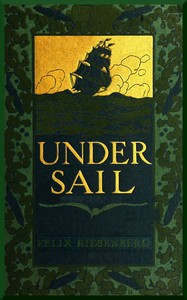
Under Sail by Felix Riesenberg
I picked up 'Under Sail' expecting a dusty nautical account. What I got was a time machine. Felix Riesenberg signed on as an apprentice seaman, or 'boy,' on the A.J. Fuller, a commercial sailing ship, in the 1890s. This book is his diary of that wild, two-year journey from New York, around Cape Horn, and up to the Pacific Northwest.
The Story
There's no traditional plot with a clear villain. The story is the voyage itself. We follow Riesenberg from his first clumsy, seasick days as the lowliest crew member, through brutal storms off Cape Horn where survival is an hourly fight. He details the exhausting, precise work of handling acres of sail, the strange hierarchy of the ship (from the feared captain down to the cook), and the long, quiet stretches where the only world is wood, rope, and water. The 'drama' comes in waves—a man overboard, a near-mutiny over rotten food, the tense navigation through icy, treacherous seas. It's a straightforward, chronological account of life in the last days of the great commercial sailing ships.
Why You Should Read It
What makes this book special is Riesenberg's voice. He's not a romantic poet; he's a practical, observant young man. His descriptions are so vivid you can smell the tar and salt, feel the sting of the cold spray, and taste the dreadful 'salt horse' beef. He doesn't glorify the life—he shows its grinding hardship and occasional cruelty. But in doing so, he makes the moments of beauty and triumph absolutely shine. When he describes the ship finally catching a fair wind and surging forward with grace and power, you feel his exhilaration. You understand the strange bond formed between men facing immense shared challenges. It's a completely authentic look at a vanished world, told without filter.
Final Verdict
This book is perfect for anyone who loves true adventure stories, maritime history, or just a brilliantly told memoir. If you enjoyed the visceral survival elements of 'The Perfect Storm' or the immersive detail of Patrick O'Brian's novels but want the real thing, you'll be glued to these pages. It's not a light beach read—it's gritty, demanding, and profound. It’s for readers who want to be transported completely, to work the yards alongside Riesenberg and earn the breathtaking views. A genuine, unforgettable classic.
This is a copyright-free edition. Thank you for supporting open literature.
Brian Perez
2 months agoI have to admit, the narrative structure is incredibly compelling. Exceeded all my expectations.
Paul Anderson
2 years agoI have to admit, the clarity of the writing makes this accessible. Absolutely essential reading.
Deborah Torres
1 year agoFast paced, good book.
Edward White
1 year agoThis is one of those stories where it manages to explain difficult concepts in plain English. I couldn't put it down.








Elijah Ramirez
1 year agoI didn't expect much, but the arguments are well-supported by credible references. Absolutely essential reading.