About 190 minutes
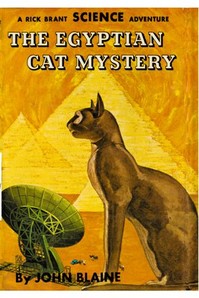
The Egyptian Cat Mystery: A Rick Brant Science-Adventure Story — Reading Notes
Technology Airships Imagined Futures
43,611 recorded words. 1 minutes difference from this book's estimate.
View Gutenberg source #31598
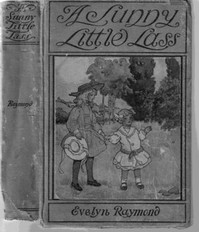
Before opening A Sunny Little Lass — Key Ideas to Explore, the edition data offers a quick orientation: 43,716 words, 3 hr 11 min estimated reading time, and 5 detected text sections.
The text analysis averages about 20.2 words per sentence, while the detected sections provide another way to judge how the source is divided.
Project Gutenberg metadata also associates the work with “Orphans -- Juvenile fiction,” connecting these edition facts with the source record’s subject description.
Explore this collection
These alternatives are selected using recorded categories and estimated reading time.
About 190 minutes
Technology Airships Imagined Futures
43,611 recorded words. 1 minutes difference from this book's estimate.
View Gutenberg source #31598About 198 minutes
Technology Airships Imagined Futures
45,539 recorded words. 7 minutes difference from this book's estimate.
View Gutenberg source #34552About 200 minutes
Technology Airships Imagined Futures
45,863 recorded words. 9 minutes difference from this book's estimate.
View Gutenberg source #33282Search stored excerpts and compare books → Choose by your preferences →
Choices use stored catalog measurements. Estimates vary with reading speed. A shared category is a catalog label, not a claim that two books have the same argument or literary quality.
Search reads excerpt text stored with this catalog and links to its associated Gutenberg record. The connection is stored in the site database; this tool does not recheck that every excerpt is word-for-word identical to that external record. Excerpt search does not cover every chapter and does not verify historical publication dates.
Catalog snapshot checked: 2026-09-25. Coverage: 99 public books, 99 available source excerpts.
Calculated from edition completeness, EPUB availability, text structure and catalogue metadata. Not a user rating.
Total of 100 points, scaled to a 2.5-5.0 range. Editions with an empty description or a missing EPUB file are not scored.
Public-domain source text
The source text is kept in the dedicated reader, separate from this catalogue record and its commentary.
The story opens in "the littlest house in Ne' York," a triangular room wedged between two warehouses, so narrow that the sun never reaches it. Here lives Glory, a girl who acts as eyes for her blind grandfather, a former sailor. Their home is a shipshape marvel of hanging hammocks, a bell marking half-hours, and a daily ritual of nautical commands. Glory's unwavering cheerfulness transforms scarcity into adventure, setting the stage for a journey that will test her resourcefulness.
The Beck household is a study in adaptation. The room is described as "piece-of-pie shaped," with furniture dangling from hooks and a gas-stove stored on a shelf to maximize floor space. The grandfather, a blind captain, runs the home like a vessel: "Decks scrubbed well, mate?" he asks, and Glory answers with a touch of her hand. This nautical routine—"Brasses polished, hawsers coiled, rations dealt"—turns poverty into order. The bell from the ceiling marks time, and hammocks serve as beds. The setting is both cramped and imaginative, a microcosm where every object has its place and every action a purpose.
Elbow Lane is a narrow street near the East River, filled with tenements and a strong odor of salt water and fish-market. Glory sees only beauty and kindness, but the text hints at harsher realities: "pinched faces" and dirt that the blind captain cannot see. The lane's other children, like Nancy, speak bluntly—"Angels are folks what live in heaven, an' they never kick ner scratch"—contrasting with Glory's sunny optimism. When Glory adopts a lost baby she calls Bonny Angel, she declares the child "a reg'lar Elbower," claiming her as part of this tough, close-knit community.
Glory's search for her grandfather leads her and Bonny Angel onto a crowded ferry. The baby, despite her angelic name, is willful: she slaps Glory's lips and kicks to direct their path. The ferry ride is a revelation for Glory, who has never crossed one before despite selling peanuts at landings. She is "delighted" by the wind and water, and the movement feels like an adventure. The unfamiliar surroundings—a coal-yard, throngs of people—contrast with the known confines of Elbow Lane. Yet Glory trusts that Bonny Angel is leading her to grandpa, a faith that drives the narrative forward.
Readers will find that the story's tension lies in the gap between Glory's sunny perspective and the gritty details of her environment. The excerpts offer a vivid portrait of a child navigating poverty with ingenuity and warmth, but the full book likely tests that optimism against real obstacles. Pay attention to how the nautical language and the cramped home shape Glory's worldview—and how the ferry crossing opens up new possibilities.
Glory’s little room in Elbow Lane made me think of how a whole world can hide in one small corner—much like that Egyptian cat business, where secrets quietly unfold between dust and shadows. There’s a gentle kind of wonder in both, the way they stay with you long after you close them. The Egyptian Cat Mystery: A Rick Brant Science-Adventure Story — Reading Notes carries that same soft ache of discovery.
Save your reaction, strongest insight, and memorable passage.