About 191 minutes
A Sunny Little Lass — Key Ideas to Explore
Technology Airships Imagined Futures
43,716 recorded words. 1 minutes difference from this book's estimate.
View Gutenberg source #30968
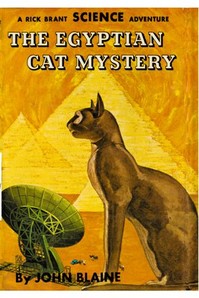
Before opening The Egyptian Cat Mystery: A Rick Brant Science-Adventure Story — Reading Notes, the edition data offers a quick orientation: 43,611 words, 3 hr 10 min estimated reading time, and 6 detected text sections.
The text analysis averages about 11.3 words per sentence, while the detected sections provide another way to judge how the source is divided.
Project Gutenberg metadata also associates the work with “Egypt -- Juvenile fiction,” connecting these edition facts with the source record’s subject description.
Explore this collection
These alternatives are selected using recorded categories and estimated reading time.
About 191 minutes
Technology Airships Imagined Futures
43,716 recorded words. 1 minutes difference from this book's estimate.
View Gutenberg source #30968About 198 minutes
Technology Airships Imagined Futures
45,539 recorded words. 8 minutes difference from this book's estimate.
View Gutenberg source #34552About 200 minutes
Technology Airships Imagined Futures
45,863 recorded words. 10 minutes difference from this book's estimate.
View Gutenberg source #33282Search stored excerpts and compare books → Choose by your preferences →
Choices use stored catalog measurements. Estimates vary with reading speed. A shared category is a catalog label, not a claim that two books have the same argument or literary quality.
Search reads excerpt text stored with this catalog and links to its associated Gutenberg record. The connection is stored in the site database; this tool does not recheck that every excerpt is word-for-word identical to that external record. Excerpt search does not cover every chapter and does not verify historical publication dates.
Catalog snapshot checked: 2026-09-25. Coverage: 99 public books, 99 available source excerpts.
Calculated from edition completeness, EPUB availability, text structure and catalogue metadata. Not a user rating.
Total of 100 points, scaled to a 2.5-5.0 range. Editions with an empty description or a missing EPUB file are not scored.
Public-domain source text
The source text is kept in the dedicated reader, separate from this catalogue record and its commentary.
The catalog subjects for The Egyptian Cat Mystery list Egypt, scientists, figurines, and astronomers, but the opening chapter immediately expands beyond those tags. The story begins not with a cat but with four simultaneous phone calls across Chicago, Paris, Cairo, and Spindrift Island, each setting a different plot thread in motion. The Cairo call involves an astronomer excited about a “hydrogen-line impulse,” while the Spindrift call places the young protagonists in a quiet Christmas setting. This global, science-driven opening suggests the mystery will intertwine a stolen artifact with a space-science puzzle, a blend that the catalog subjects only partially capture.
The excerpts devote considerable space to the logistics of radio astronomy. Dr. Kerama outlines a plan to determine how long a hydrogen source is within view of their antenna, set up a schedule, and shift to other wavelengths. Farid arranges a radio-teletype circuit and installation crews. This level of technical procedure—calibration, shift assignments, horizon times—is unusual for a juvenile mystery and suggests the author aimed for plausibility. Rick later explains to Scotty that hydrogen gas emits energy on the 21-centimeter wavelength, and that the source is moving at high velocity and giving off unnatural signals. The science is not just backdrop; it drives the plot forward.
Despite the title, the cat figurine appears primarily as a stolen object that triggers the adventure. The opening line—“The room had been searched inch by inch. Someone wanted the cat!”—establishes its importance, but the excerpts show little direct interaction with the figurine itself. Instead, Rick carries a live kitten in his pocket, and Scotty jokes about an “Egyptian space cat mewing for milk from the Milky Way.” The live kittens provide a light counterpoint to the serious astronomical work. Rick notes that “placing the kittens didn’t answer the questions” about why the cat is important, indicating that the figurine’s significance remains unexplained in the available text.
The story moves quickly from snowy Spindrift Island to Cairo, where Rick and Scotty visit the Great Pyramid of Khufu. The description is brief but evocative: “The blocks were huge, weathered by centuries of wind and sand.” The boys plan to see the pyramids, have lunch at the Mena House, and return to work. This tourist-like interlude grounds the science-fiction elements in a real, recognizable location. The juxtaposition of ancient monuments and cutting-edge radio telescopes is a recurring motif, though the excerpts do not reveal whether the pyramid itself becomes a setting for action. The catalog subject “Egypt” is thus accurate but understated; the country is not merely a backdrop but a place where the mystery unfolds.
Readers should note that the excerpts cover only the first few chapters and the scientific setup. The cat’s secret, the identity of the intruders, and the resolution of the hydrogen-line mystery are not included. The story balances juvenile adventure with genuine scientific exposition, and the catalog subjects—especially “figurines” and “astronomers”—are more intertwined than they first appear. Pay attention to how the author uses real astronomical concepts to advance the plot, and consider whether the cat figurine ultimately serves as a clue or a red herring.
Reading about Rick and Scotty chasing that cat figurine through Cairo, I kept thinking of another old favorite. Something about the way a small mystery unravels into something bigger—ancient and scientific at once—feels familiar. There’s a quieter charm in Danger at the Drawbridge — Reading Companion, where the stakes are smaller, yet the atmosphere lingers just as warmly. Odd, how these stories find each other.
Answer a few questions and save a private reflection on this device.