About 200 minutes
The Boy Pilot of the Lakes; Or, Nat Morton's Perils — Key Ideas to Explore
Technology Airships Imagined Futures
45,863 recorded words. 2 minutes difference from this book's estimate.
View Gutenberg source #33282
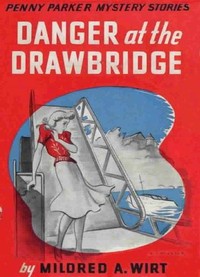
The catalog record for Danger at the Drawbridge — Reading Companion provides practical reading context through 45,539 words, 3 hr 18 min estimated reading time, and 7 detected text sections.
The text analysis averages about 11.0 words per sentence, while the detected sections provide another way to judge how the source is divided.
Project Gutenberg metadata also associates the work with “Adventure and adventurers -- Juvenile fiction,” connecting these edition facts with the source record’s subject description.
Explore this collection
These alternatives are selected using recorded categories and estimated reading time.
About 200 minutes
Technology Airships Imagined Futures
45,863 recorded words. 2 minutes difference from this book's estimate.
View Gutenberg source #33282About 200 minutes
Technology Airships Imagined Futures
45,776 recorded words. 2 minutes difference from this book's estimate.
View Gutenberg source #34975About 191 minutes
Technology Airships Imagined Futures
43,716 recorded words. 7 minutes difference from this book's estimate.
View Gutenberg source #30968Search stored excerpts and compare books → Choose by your preferences →
Choices use stored catalog measurements. Estimates vary with reading speed. A shared category is a catalog label, not a claim that two books have the same argument or literary quality.
Search reads excerpt text stored with this catalog and links to its associated Gutenberg record. The connection is stored in the site database; this tool does not recheck that every excerpt is word-for-word identical to that external record. Excerpt search does not cover every chapter and does not verify historical publication dates.
Catalog snapshot checked: 2026-09-25. Coverage: 99 public books, 99 available source excerpts.
Calculated from edition completeness, EPUB availability, text structure and catalogue metadata. Not a user rating.
Total of 100 points, scaled to a 2.5-5.0 range. Editions with an empty description or a missing EPUB file are not scored.
Public-domain source text
The source text is kept in the dedicated reader, separate from this catalogue record and its commentary.
The opening chapter introduces Penny Parker through a domestic scene that quickly reveals her mischievous streak: she tries to ride the kitchen dumbwaiter rather than climb the stairs. This small rebellion, met with the housekeeper's exasperation, establishes Penny as a resourceful and slightly reckless protagonist. The dialogue is brisk and peppered with playful banter, setting a lighthearted tone that contrasts with the mystery to come.
By the end of the first chapter, Penny has accepted an assignment from her father, a newspaper editor, to investigate a story. The reader is thus primed for a plot driven by journalistic curiosity and independent action, with Penny's home life serving as a springboard into adventure.
The early chapters establish Penny’s method: she gathers information through observation and casual conversation. When she learns of a bridegroom who vanished on his wedding day, she does not wait for official permission. Instead, she enlists her friend Louise and a local boy with a rowboat to reach the Kippenberg estate, which is cut off by a drawbridge guarded by a watchman. The text emphasizes Penny’s persistence—she notes a press car from a rival newspaper and deliberately avoids the bridge, choosing a circuitous river route.
Key details emerge through dialogue: the missing man is Grant Atherwald, and Penny’s father mentions a former associate named Aaron Dietz. These names are dropped casually, as if the reader is expected to keep track. The excerpts do not reveal whether these leads are red herrings or genuine clues, but the pattern of overheard conversations and secondhand information is established early.
The drawbridge is not merely a setting but a recurring barrier. In the excerpts, it is mentioned in chapter titles and described as a physical and social divide: reporters are turned away, police visit but gain no access, and Penny must rely on a boy’s boat to cross the river. The bridge is guarded by an old watchman who offers a dollar to anyone who will take him across—a detail that suggests he is either complicit or merely lazy.
The structure of the narrative mirrors this obstacle: the chapters are short, and each ends with a question or a new complication. For instance, after Penny and Louise successfully land on the estate, the reader is left wondering what they will find. The bridge thus functions as a threshold that Penny must repeatedly cross, both literally and figuratively, as she moves from the known world of home and newspaper office into the unknown territory of the Kippenberg property.
The prose is efficient and colloquial, with dialogue carrying much of the exposition. Penny’s speech is marked by a cheerful irreverence: she tells Louise she “tosses off germs like a duck shedding water,” and she refers to her car as “battered.” The housekeeper’s scolding (“I declare, I don’t know when you’ll grow up”) reinforces the generational tension common in juvenile fiction of the era.
Period details anchor the story in 1940: an automatic lift, a press car, a radio playing too loud, and a rowboat as a primary means of transport. The text does not romanticize these elements; they are simply part of the characters’ everyday world. The author, Mildred A. Wirt, was a prolific writer of series fiction, and the style here is consistent with the Penny Parker series: fast-paced, with a focus on action and dialogue rather than interior reflection.
The excerpts scatter several clues without explanation. Penny overhears a conversation about a boatman and a man named Aaron Dietz, but the context is unclear. She also mentions a “forbidden pool” and a “stone tower,” which appear in chapter titles. The reader is invited to speculate: Is the missing bridegroom connected to the Kippenberg estate? What is the significance of the lily pool?
The narrative does not provide answers within the excerpts, but it rewards attention to repeated motifs. The drawbridge, the boat, and the river are mentioned in multiple chapters, suggesting they will be central to the resolution. Penny’s method—sneaking, questioning, and following leads—is modeled for the reader, who can attempt to solve the mystery alongside her. The story’s structure, with its cliffhanger chapter endings, encourages reading straight through.
Readers approaching Danger at the Drawbridge for the first time will benefit from noting how the author parcels out information. Pay attention to names mentioned in passing, and observe how Penny’s access to places is repeatedly blocked—then circumvented. The story moves quickly, and the excerpts suggest that the drawbridge itself may hold the key to the mystery. Trust Penny’s instincts, but keep your own list of suspects.
There’s something about that old drawbridge and the lily pool that made me think of quieter afternoons, the way a mystery can sit with you long after the last page turns. The Tremendous Event — Edition Insights held a similar softness for me, a lingering sense of place rather than just plot.
Build a private reading journal entry for this title.