About 269 minutes
Ethel Morton at Chautauqua — Reading Companion
Technology Airships Imagined Futures
61,829 recorded words. 6 minutes difference from this book's estimate.
View Gutenberg source #36010
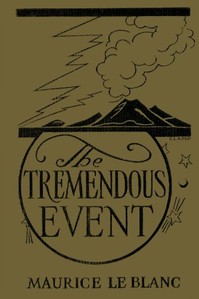
The catalog record for The Tremendous Event — Edition Insights provides practical reading context through 60,330 words, 4 hr 23 min estimated reading time, and 7 detected text sections.
The text analysis averages about 14.9 words per sentence, while the detected sections provide another way to judge how the source is divided.
Project Gutenberg metadata also associates the work with “Science fiction,” connecting these edition facts with the source record’s subject description.
Explore this collection
These alternatives are selected using recorded categories and estimated reading time.
About 269 minutes
Technology Airships Imagined Futures
61,829 recorded words. 6 minutes difference from this book's estimate.
View Gutenberg source #36010About 250 minutes
Technology Airships Imagined Futures
57,360 recorded words. 13 minutes difference from this book's estimate.
View Gutenberg source #25869About 243 minutes
Technology Airships Imagined Futures
55,780 recorded words. 20 minutes difference from this book's estimate.
View Gutenberg source #27737Search stored excerpts and compare books → Choose by your preferences →
Choices use stored catalog measurements. Estimates vary with reading speed. A shared category is a catalog label, not a claim that two books have the same argument or literary quality.
Search reads excerpt text stored with this catalog and links to its associated Gutenberg record. The connection is stored in the site database; this tool does not recheck that every excerpt is word-for-word identical to that external record. Excerpt search does not cover every chapter and does not verify historical publication dates.
Catalog snapshot checked: 2026-09-25. Coverage: 99 public books, 99 available source excerpts.
Calculated from edition completeness, EPUB availability, text structure and catalogue metadata. Not a user rating.
Total of 100 points, scaled to a 2.5-5.0 range. Editions with an empty description or a missing EPUB file are not scored.
Public-domain source text
The source text is kept in the dedicated reader, separate from this catalogue record and its commentary.
The novel opens not with the titular catastrophe but with a telegram, printed in heavy type, that injects urgency into a tranquil scene at the New Golf Club. Simon Dubosc, the protagonist, is first seen reacting to news of a fishing vessel's report, and the narrative immediately establishes a contrast between the leisured world of club terraces and the looming disaster. The author's note, written from a fifty-year perspective, frames the story as a historical account, claiming that Simon Dubosc's role has been missing from the record. This framing device gives the fiction a documentary weight, even as the early chapters dwell on personal concerns—a missing letter, a threatened departure—before the earth itself gives way.
The opening chapters move at a measured, almost social pace, with dialogue and descriptive passages that establish character and setting. Simon Dubosc's exclamation—"Oh, but this is terrible!"—is a cry of personal alarm, not global portent. The narrative voice is that of a conventional adventure story, with a focus on romantic intrigue and a missing heiress. However, once the earthquake strikes, the prose accelerates into a series of fragmented, sensory impressions. The wreck of a ship becomes a labyrinth of horror, where the narrator describes "the most loathsome face imaginable, a scoundrelly, pallid, cruel face" and the systematic looting of corpses. The shift is abrupt: the leisurely pace of the golf club gives way to a frantic, almost cinematic sequence of discovery, with Simon and his companion moving through corridors filled with "the same fury of destruction."
Leblanc's prose becomes markedly visceral in the post-catastrophe sections. The description of a dead woman—"the left hand had been severed at the wrist and that two fingers were lacking on the right hand"—is clinical yet horrifying, emphasizing the brutality of the scavengers. The language shifts from the polite registers of the clubhouse to a raw, almost journalistic tone. The looters are compared to "beasts of prey, carrion brutes," and the narrative lingers on physical details: a "bald skull dripping with sweat," a boy smoking a cigar "with a bantering air." This attention to grotesque particulars grounds the fantastic premise in a tangible, disturbing reality. The translator, Alexander Teixeira de Mattos, preserves a crisp, direct style that avoids melodrama, letting the imagery carry the emotional weight.
The wreck of the ship serves as a recurring setting and symbol throughout the excerpts. It is not merely a location but a stage for human depravity and survival. The repeated motif of "smashin' 'er up"—the boy's casual phrase for his father's looting—echoes the larger destruction of the earthquake. The ship's corridors become a maze of "dark corners" and "fierce-looking ruffians," a confined space that amplifies the sense of claustrophobia and danger. Simon's search for Isabel Bakefield is constantly interrupted by these scenes of violence, creating a rhythm of hope and horror. The wreck is also a repository of class markers: the Havana cigar, the first-class cabins, the "French lady" identifiable by her clothes. These details tie the personal drama to the social upheaval that the earthquake has unleashed.
The author's note introduces a retrospective frame, claiming that the story is being told fifty years after the event, when a statue of Simon Dubosc overlooks the scene. This device lends an epic quality to the narrative, suggesting that Simon's actions will have lasting significance. The note states that "it was in Simon Dubosc that the western spirit first became conscious of itself," a grandiose claim that the excerpts only begin to explore. The reader is left to wonder how the anxious young man at the golf club transforms into a figure of historical importance. The frame also creates a tension between the intimate, immediate voice of the main narrative and the detached, commemorative tone of the preface. This dual perspective invites the reader to consider the gap between personal experience and historical legacy.
Readers approaching The Tremendous Event should attend to the shifts in narrative tempo and register. The early chapters, with their focus on social intrigue and romantic tension, may seem at odds with the later scenes of survival and brutality. Yet this contrast is deliberate: the catastrophe strips away the veneer of civilization, and the prose follows suit. Pay attention to how Leblanc uses physical details—a severed hand, a dripping skull, a boy's smirk—to anchor the extraordinary in the concrete. The novel is as much about the breakdown of order as it is about the event itself.
That rainy afternoon, the Channel’s collapse in Leblanc’s pages felt less like adventure and more like the quiet dread of things coming undone. Simon’s world, so suddenly wrecked, stayed with me as the light dimmed. Later, by lamplight, I drifted into Danger at the Drawbridge — Reading Companion, and found the same hovering unease—only closer to stone walls and still water, a smaller ruin of a different kind.
Your answers remain private and are stored only in this browser.