About 200 minutes
The Boy Pilot of the Lakes; Or, Nat Morton's Perils — Key Ideas to Explore
Technology Airships Imagined Futures
45,863 recorded words. 0 minutes difference from this book's estimate.
View Gutenberg source #33282
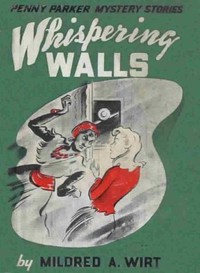
Whispering Walls — Key Ideas to Explore can be approached with a clearer sense of reading commitment from its source measurements: 45,776 words, 3 hr 20 min estimated reading time, and 7 detected text sections.
The text analysis averages about 11.0 words per sentence, while the detected sections provide another way to judge how the source is divided.
Project Gutenberg metadata also associates the work with “Adventure and adventurers -- Juvenile fiction,” connecting these edition facts with the source record’s subject description.
Explore this collection
These alternatives are selected using recorded categories and estimated reading time.
About 200 minutes
Technology Airships Imagined Futures
45,863 recorded words. 0 minutes difference from this book's estimate.
View Gutenberg source #33282About 198 minutes
Technology Airships Imagined Futures
45,539 recorded words. 2 minutes difference from this book's estimate.
View Gutenberg source #34552About 206 minutes
Technology Airships Imagined Futures
47,284 recorded words. 6 minutes difference from this book's estimate.
View Gutenberg source #33605Search stored excerpts and compare books → Choose by your preferences →
Choices use stored catalog measurements. Estimates vary with reading speed. A shared category is a catalog label, not a claim that two books have the same argument or literary quality.
Search reads excerpt text stored with this catalog and links to its associated Gutenberg record. The connection is stored in the site database; this tool does not recheck that every excerpt is word-for-word identical to that external record. Excerpt search does not cover every chapter and does not verify historical publication dates.
Catalog snapshot checked: 2026-09-25. Coverage: 99 public books, 99 available source excerpts.
Calculated from edition completeness, EPUB availability, text structure and catalogue metadata. Not a user rating.
Total of 100 points, scaled to a 2.5-5.0 range. Editions with an empty description or a missing EPUB file are not scored.
Public-domain source text
The source text is kept in the dedicated reader, separate from this catalogue record and its commentary.
Mildred A. Wirt opens Whispering Walls with a bowling alley scene that immediately establishes Penny Parker's energetic voice and her dual life as a student and reporter. The dialogue between Penny and her friend Louise Sidell is brisk and laced with affectionate teasing—Louise calls Penny's nose “freckled” and accuses her of loving excitement more than work. This banter not only characterizes the two girls but also sets a tone of casual camaraderie that contrasts with the mystery to come. Wirt's descriptive choices are economical: a “sandy-gold lock of hair” and a “friendly grin” give Penny a vivid, approachable presence without overloading the page.
Wirt's prose in Whispering Walls reflects Penny's journalistic instincts. Verbs are active and precise: Penny “sent the heavy ball crashing,” “chalked up the score,” and “squinted at the wall clock.” The narration rarely lingers; it moves with the same urgency Penny feels when she realizes she is late for work. This brisk pace is a deliberate authorial choice that aligns with the mystery genre, keeping readers attuned to details that might otherwise be overlooked. For instance, when Penny and her friend Salt examine the thatched-roof cottage, Wirt describes the cocoanut shell lamp with its “bowl nearly exhausted of oil”—a small, telling detail that hints at recent use. The author trusts readers to notice such clues without explanatory asides.
Conversations in the novel serve dual purposes: they reveal personality and advance suspicion. Penny's exchanges with Lorinda are particularly telling. When Lorinda discovers the chest is empty, she immediately reassures Penny, “Of course I know you didn't” take anything, but her “tense, strained expression” undercuts her words. Wirt uses dialogue to layer meaning—what characters say often conflicts with their body language. The muffled drum sound that interrupts them is described as “dum—dum—dum,” a rare onomatopoeic choice that emphasizes its rhythmic, almost hypnotic quality. Penny's response—“Could this cottage have a secret panel?”—is direct and logical, while Lorinda's “I don't think so” is hesitant, leaving room for doubt. These verbal cues keep the reader attuned to who knows what.
Wirt builds suspense through controlled sensory details. The cottage is described not by its overall appearance but by specific objects: the chest, the cocoanut shell lamp, the “thicker” section of wall by the fireplace. Sound is especially important. The drumming is “muffled” and seems to come “from behind the walls,” creating an eerie, claustrophobic effect. When the girls leave the cottage, they test the lock twice, and Lorinda murmurs, “The sound of those drums—did I imagine it?” This question, repeated nearly verbatim by Penny, reinforces the ambiguity of the experience. Wirt avoids over-explaining; the reader shares the characters' uncertainty. The beach scene that follows offers a visual contrast—open space and silence—but the tension remains because the source of the sound is unresolved.
The chapter titles in Whispering Walls function as mini-cliffhangers. “The Plumed Serpent” introduces an exotic note, while “Whispering Walls” and “Ghost of the Dark Corners” promise supernatural elements that the text treats ambiguously. Wirt ends chapters on moments of discovery or heightened tension: the floor giving way beneath Penny (as noted in the frontispiece), the empty chest, the drumming. These breaks are not arbitrary; they mirror the rhythm of a newspaper serial, where each installment must compel the reader to return. Within chapters, Wirt varies paragraph length—short lines of dialogue interspersed with longer descriptive passages—to control reading speed. The effect is a narrative that feels both efficient and immersive, never wasting a word.
Readers attentive to Wirt's craft will notice how she balances Penny's breezy confidence with the unsettling atmosphere of the cottage. The author's restraint—leaving the drum's origin unexplained, the chest's contents unnamed until later—invites the audience to piece together clues alongside the characters. This is a mystery built on implication rather than exposition, and its pleasures lie in the details that whisper rather than shout.
There's something in the way Whispering Walls lingers on a quiet footstep or a half-spoken retort—that patient building of unease—that always brings me back to childhood evenings with Le Petit Chose (Histoire d'un Enfant) — A Closer Reading. Both feel less like plots than memories I’ve somehow borrowed, full of rooms that hold their breath. I miss that unhurried dread, the way words once seemed to wait for me.
Answer a few questions and save a private reflection on this device.