About 272 minutes
The Phantom of the River — Story, Setting & Ideas
Exploration Survival Adventure Tales
62,452 recorded words. 28 minutes difference from this book's estimate.
View Gutenberg source #23026
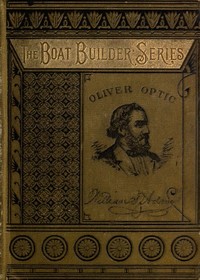
All Adrift; Or, The Goldwing Club — Story, Setting & Ideas can be approached with a clearer sense of reading commitment from its source measurements: 68,957 words, 5 hr estimated reading time, and 7 detected text sections.
The text analysis averages about 15.8 words per sentence, while the detected sections provide another way to judge how the source is divided.
Project Gutenberg metadata also associates the work with “Conduct of life -- Juvenile fiction,” connecting these edition facts with the source record’s subject description.
Explore this collection
These alternatives are selected using recorded categories and estimated reading time.
About 272 minutes
Exploration Survival Adventure Tales
62,452 recorded words. 28 minutes difference from this book's estimate.
View Gutenberg source #23026About 335 minutes
Exploration Survival Adventure Tales
76,971 recorded words. 35 minutes difference from this book's estimate.
View Gutenberg source #25966About 339 minutes
Exploration Survival Adventure Tales
77,850 recorded words. 39 minutes difference from this book's estimate.
View Gutenberg source #22646Search stored excerpts and compare books → Choose by your preferences →
Choices use stored catalog measurements. Estimates vary with reading speed. A shared category is a catalog label, not a claim that two books have the same argument or literary quality.
Search reads excerpt text stored with this catalog and links to its associated Gutenberg record. The connection is stored in the site database; this tool does not recheck that every excerpt is word-for-word identical to that external record. Excerpt search does not cover every chapter and does not verify historical publication dates.
Catalog snapshot checked: 2026-09-25. Coverage: 99 public books, 99 available source excerpts.
Calculated from edition completeness, EPUB availability, text structure and catalogue metadata. Not a user rating.
Total of 100 points, scaled to a 2.5-5.0 range. Editions with an empty description or a missing EPUB file are not scored.
Public-domain source text
The source text is kept in the dedicated reader, separate from this catalogue record and its commentary.
Oliver Optic's All Adrift; Or, The Goldwing Club opens with a boy who is "all adrift in the world," as the preface puts it, and the narrative voice immediately establishes a dual focus: the practical challenges of boat handling and the social pressures of suspicion. The story's language alternates between brisk dialogue—"What are you doing up there? demanded Pearl"—and explanatory passages about sailing, such as Dory's claim that "any boat will tip over if you don't handle her right." This tension between action and instruction shapes the reader's experience.
The excerpts reveal a narrative that relies heavily on direct speech to advance the plot and reveal character. In the interrogation scene, Dory's responses are clipped and factual: "I was. I was here to see a gentleman who had a room on the next floor. I left between ten and eleven." The detective Peppers speaks in short, pointed questions—"Have you any money, Dory?"—while the landlord Mr. Velsey interjects with commands like "Come to the point at once." This rapid exchange creates a sense of urgency and distrust, with the reader piecing together the accusation alongside Dory. The dialogue is not merely expository; it conveys power dynamics, as when the landlord later shifts tone entirely: "That sets you all right, Dory Dornwood." The change from suspicion to relief is signaled through speech patterns rather than internal monologue.
Optic embeds technical sailing knowledge into the narrative, often through Dory's explanations. When asked about the Goldwing's safety, Dory responds with a blend of confidence and expertise: "I sailed her across the lake yesterday when it blew a young hurricane, and she is as safe as any boat I ever was in." He then specifies that he "had overcome the difficulty" that made the boat unruly, hinting at mechanical problem-solving. The preface promises that the hero shows "ingenuity, and fertility of resource," and the excerpts deliver this through concrete references to boat handling. The language is precise—"Colchester Shoal," "aground," "the bottom"—and avoids vague praise. This technical layer grounds the adventure in practical seamanship, distinguishing the novel from purely fantastical tales.
The narrative pace varies markedly between the static, tense dialogue of the hotel room and the dynamic, forward-moving sequences on the water. In the interrogation, time slows as Dory produces his wallet and the detective examines the bills: "Peppers passed them to Moody at once. The latter shook his head, and handed them back." The action is minimal, the focus on small gestures. Contrast this with the later scene where Dory agrees to transport Peppers: "Ten dollars! And this sum was to be made with the Goldwing. It would pay nearly one-fourth of what she cost." Here, the pace quickens with the prospect of earning money and clearing his name. The landlord's invitation to dinner and the offer of future business compress time, moving from crisis to opportunity in a few paragraphs. This alternation between stillness and momentum keeps the reader engaged without relying on constant action.
The Goldwing is more than a setting; it is a focal point of the narrative's language and structure. Dory's identity is tied to the boat—he is repeatedly called "the young skipper"—and his moral standing is tested through his ownership of it. The accusation of theft centers on whether he could have bought the boat with stolen money, and his vindication comes when the detective returns the five-dollar bills. The boat also serves as a vehicle for social mobility: "Thank you, sir: that's what I want," Dory says when the landlord promises future business. Optic uses the boat to bridge the adventure and moral strands of the story, making it a symbol of both practical skill and personal integrity.
Readers attentive to language will notice how Optic uses repetition of key phrases—"all adrift," "the bottom," "ten dollars"—to reinforce themes of instability and resolution. The narrative voice is consistent in its directness, rarely indulging in metaphor. Pay attention to how Dory's speech evolves from defensive to confident as the story progresses, and how the boat's description shifts from a source of trouble to a means of redemption. These patterns offer a clear entry point into the novel's craft.
Reading about Dory’s quiet dignity under suspicion, I remembered being a boy myself, accused of something I hadn’t done, and finding refuge in a rowboat’s rhythmic creak. Another old story, The Phantom of the River — Story, Setting & Ideas, gave me that same hush of water and solitude, where the boat felt like the only honest witness.
Use these questions to collect your thoughts before moving on.