About 250 minutes
Bosom Friends: A Seaside Story — Context and Discussion
Young Readers Enchanted Adventures
57,291 recorded words. 4 minutes difference from this book's estimate.
View Gutenberg source #33390
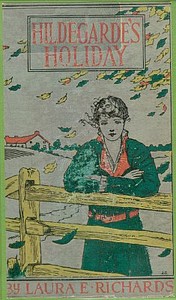
For Hildegarde's Holiday: A Story for Girls — Context and Discussion, the stored edition analysis reports 58,391 words, 4 hr 14 min estimated reading time, and 7 detected text sections.
The text analysis averages about 14.5 words per sentence, while the detected sections provide another way to judge how the source is divided.
Project Gutenberg metadata also associates the work with “Conduct of life -- Juvenile fiction,” connecting these edition facts with the source record’s subject description.
Explore this collection
These alternatives are selected using recorded categories and estimated reading time.
About 250 minutes
Young Readers Enchanted Adventures
57,291 recorded words. 4 minutes difference from this book's estimate.
View Gutenberg source #33390About 248 minutes
Young Readers Enchanted Adventures
56,928 recorded words. 6 minutes difference from this book's estimate.
View Gutenberg source #26538About 260 minutes
Young Readers Enchanted Adventures
59,602 recorded words. 6 minutes difference from this book's estimate.
View Gutenberg source #28887Search stored excerpts and compare books → Choose by your preferences →
Choices use stored catalog measurements. Estimates vary with reading speed. A shared category is a catalog label, not a claim that two books have the same argument or literary quality.
Search reads excerpt text stored with this catalog and links to its associated Gutenberg record. The connection is stored in the site database; this tool does not recheck that every excerpt is word-for-word identical to that external record. Excerpt search does not cover every chapter and does not verify historical publication dates.
Catalog snapshot checked: 2026-09-25. Coverage: 99 public books, 99 available source excerpts.
Calculated from edition completeness, EPUB availability, text structure and catalogue metadata. Not a user rating.
Total of 100 points, scaled to a 2.5-5.0 range. Editions with an empty description or a missing EPUB file are not scored.
Public-domain source text
The source text is kept in the dedicated reader, separate from this catalogue record and its commentary.
From the opening scene in a hospital waiting-room, where Hildegarde paces with a small dog in anxious attendance, Laura E. Richards establishes a pattern of restless movement that defines Hildegarde's Holiday. The narrative shifts quickly from the confined, tense interior of Blank Hospital to the open air of Bywood, where the girls explore riverbanks and woods. This structural alternation between indoor and outdoor settings—between duty and leisure—shapes the story's rhythm.
The first chapter, titled “Introductory,” places Hildegarde in a state of high nervous excitement, pacing in a small room. Her dog, unable to understand her agitation, is sent to a corner. This image of constrained energy recurs throughout the excerpts: Hildegarde is often in motion—walking, rowing, or pursuing butterflies—while Rose rests. The contrast between the two girls’ physical states is drawn through their movements: Hildegarde’s quick steps and dilated pupils versus Rose’s quiet repose on a mossy tree trunk. The narrative uses these moments of waiting and walking to build tension before releasing it into the next scene.
Once the holiday begins, the setting opens up. The girls take a boat on the river, and Richards describes the banks with precise detail: “high, dark banks of hemlock and pine and white birch.” The discovery of a stream they name “Halcyon Stream” is marked by a kingfisher’s sudden appearance—a flash of “white barred wings” and a “loud shrill cry.” This moment of enchantment is undercut by a hint of transgression: picking a single cardinal-flower seems to anger the bird. The passage blends natural observation with a fairy-tale sensibility, as Rose jokes about being turned into black stones. The river journey becomes a structural device for moving between ordinary and enchanted spaces.
Flowers appear repeatedly as objects of desire and restraint. Hildegarde and Rose hunt for rare ferns and stalk cardinal-flowers; later, they encounter “rank behind rank” of the same flower along the stream. The picking of a single bloom triggers the kingfisher’s cry, suggesting that the natural world has its own rules. In the hospital scene, children speak of “tripod fever” and a boy calls Hildegarde “sing-girl,” linking her to the comfort of song rather than the gathering of flowers. These floral details are not mere decoration—they signal moments of transition, from the hospital’s sterile air to the woods’ vibrant life, and from innocence to a gentle awareness of limits.
Dialogue in the excerpts is often fragmentary, capturing children’s imperfect speech (“orky, dess like people's!”) and Hildegarde’s half-formed wishes. The narrative also includes moments of quiet observation: Rose counts six kinds of moss, watches sunlight “twinkling through the branches,” and hums a ballad about a queen in green and gold. These pauses balance the more active scenes. The structure of the book, as suggested by the chapter titles, moves from “Introductory” through specific episodes (“The Orchard,” “On the River,” “Flower-Day”) to a concluding “Joyous Gard.” The alternation of voice and silence, action and stillness, gives the story a measured, episodic rhythm.
Readers attentive to the interplay of movement and stillness will find a coherent pattern in Hildegarde's Holiday. The hospital waiting-room, the river journey, and the woodland rest all serve as structural anchors. Pay particular attention to how Richards uses natural details—flowers, birds, light—to signal shifts in mood and setting. The story rewards those who notice the small, precise observations woven into its episodic frame.
I have always loved how both Hildegarde’s Holiday and Father Brighthopes; Or, An Old Clergyman's Vacation — Context and Discussion carry their healing outdoors, away from sickrooms and into quiet green places. There, flowers and patient voices do their gentle work, and the story breathes slow, like a child falling asleep beside an open window. A restful kinship, that, between two books.
Capture what you thought, learned, and would like to remember.