About 131 minutes
Little Grandfather — Edition Insights
Young Readers Enchanted Adventures
29,945 recorded words. 6 minutes difference from this book's estimate.
View Gutenberg source #25481
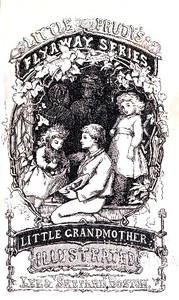
This digital edition of Little Grandmother — Edition Insights is described by source-level measurements including 28,749 words, 2 hr 5 min estimated reading time, and 4 detected text sections.
The text analysis averages about 16.4 words per sentence, while the detected sections provide another way to judge how the source is divided.
Project Gutenberg metadata also associates the work with “Christian life -- Juvenile fiction,” connecting these edition facts with the source record’s subject description.
Explore this collection
These alternatives are selected using recorded categories and estimated reading time.
About 131 minutes
Young Readers Enchanted Adventures
29,945 recorded words. 6 minutes difference from this book's estimate.
View Gutenberg source #25481About 118 minutes
Young Readers Enchanted Adventures
26,994 recorded words. 7 minutes difference from this book's estimate.
View Gutenberg source #21471About 153 minutes
Young Readers Enchanted Adventures
35,019 recorded words. 28 minutes difference from this book's estimate.
View Gutenberg source #21464Search stored excerpts and compare books → Choose by your preferences →
Choices use stored catalog measurements. Estimates vary with reading speed. A shared category is a catalog label, not a claim that two books have the same argument or literary quality.
Search reads excerpt text stored with this catalog and links to its associated Gutenberg record. The connection is stored in the site database; this tool does not recheck that every excerpt is word-for-word identical to that external record. Excerpt search does not cover every chapter and does not verify historical publication dates.
Catalog snapshot checked: 2026-09-25. Coverage: 99 public books, 99 available source excerpts.
Calculated from edition completeness, EPUB availability, text structure and catalogue metadata. Not a user rating.
Total of 100 points, scaled to a 2.5-5.0 range. Editions with an empty description or a missing EPUB file are not scored.
Public-domain source text
The source text is kept in the dedicated reader, separate from this catalogue record and its commentary.
The story begins not with a grandmother but with a newborn: Patience Lyman, born on New Year's Day 1800 in a town called Perseverance, Maine. Sophie May frames the narrative as a tale told to Flyaway Clifford, with the infant who will one day become Grandma Parlin lying under a red and green patchwork quilt, “exactly six hours old, and not a day over.” Her mother names her Patience, predicting trouble ahead, and hopes the name will help her bear it. The opening establishes a dual perspective—the reader sees both the wrinkled grandmother of the present and the helpless baby of the past—and immediately signals that this is a story about growth, character, and the quiet lessons of everyday life.
Patience Lyman enters the world on the first day of a new century, and her mother’s first act is to give her a name freighted with expectation. “If she lives she will have plenty of trouble,” Mrs. Lyman says, “and perhaps the name will help her bear it better.” The mother then lies silent, praying that the child “might grow up in the fear of the Lord.” This moment sets the moral tone: the story will measure character not by wealth or beauty but by endurance and faith. The nurse, Siller Noonin, calls the baby “the sweetest little angel picter,” but Mrs. Lyman dismisses such talk. The contrast between worldly praise and spiritual hope is drawn immediately, and it recurs throughout the excerpts.
When Patty (as she is called) envies Linda Chase’s calico gown that “almost stood alone,” her mother responds with a firm lesson: “My little girl must try to be happy in the state in which God has placed her.” Patty misunderstands, thinking “state” means the District of Maine, but the point is clear. The episode deepens when Patty visits Linda’s home and finds Mrs. Chase with red eyes, despite her riches. Patty recalls Siller Noonin’s remark that Mrs. Chase has “everything heart can wish, except a bottle to put her tears in.” The child wonders why a handkerchief won’t do, and why a rich husband doesn’t simply buy a bottle. This moment of naive logic exposes the gap between material comfort and inner sorrow—a pattern the book returns to.
Patty’s overnight visit at the Chases’ takes a frightening turn when she wakes to scuffling, lights, and a voice saying, “Look out for his head, George.” Linda whispers that Freddy is sick, but Patty hears “dreadful words” and kicking against the wall. The scene is left unresolved in the excerpts, but it clearly contrasts with Patty’s own home, where her mother never complains of feeling “bad round the heart.” The episode uses sound and darkness to create tension, and it hints at troubles—perhaps intemperance or violence—that the story will not fully explain. What is clear is that Patty’s simple world of gingham gowns and cinnamon tears is being measured against a household where wealth cannot prevent fear.
Readers should watch for the way Sophie May uses small objects—a sampler, a silk pocket, a brass kettle—to carry moral weight. The narrative voice shifts between a knowing adult telling the story and the limited perspective of young Patty, creating irony without condescension. The excerpts leave several threads hanging, including the fate of Fred Chase and the meaning of Mrs. Chase’s bottle. The book rewards attention to these details, which are never merely decorative.
Reading about little Patience in her Maine kitchen, there's a particular ache in watching childhood borders become so small. That same ache lingers in the quiet corners of The Fugitives: The Tyrant Queen of Madagascar — Themes and Context, where a girl’s world widens into something vast and unforgiving. I suppose we’re all just trying to hold onto our own sampler-stitched truths.
Capture what you thought, learned, and would like to remember.