About 133 minutes
Wrecked but not Ruined — Key Ideas to Explore
Exploration Survival Adventure Tales
30,407 recorded words. 15 minutes difference from this book's estimate.
View Gutenberg source #23388
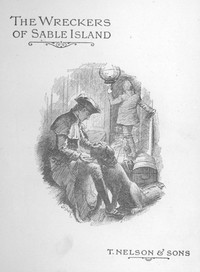
For The Wreckers of Sable Island — A Closer Reading, the stored edition analysis reports 26,979 words, 1 hr 58 min estimated reading time, and 3 detected text sections.
The text analysis averages about 19.6 words per sentence, while the detected sections provide another way to judge how the source is divided.
Project Gutenberg metadata also associates the work with “Adventure stories,” connecting these edition facts with the source record’s subject description.
Explore this collection
These alternatives are selected using recorded categories and estimated reading time.
About 133 minutes
Exploration Survival Adventure Tales
30,407 recorded words. 15 minutes difference from this book's estimate.
View Gutenberg source #23388About 162 minutes
Exploration Survival Adventure Tales
37,213 recorded words. 44 minutes difference from this book's estimate.
View Gutenberg source #33465About 194 minutes
Exploration Survival Adventure Tales
44,518 recorded words. 76 minutes difference from this book's estimate.
View Gutenberg source #34850Search stored excerpts and compare books → Choose by your preferences →
Choices use stored catalog measurements. Estimates vary with reading speed. A shared category is a catalog label, not a claim that two books have the same argument or literary quality.
Search reads excerpt text stored with this catalog and links to its associated Gutenberg record. The connection is stored in the site database; this tool does not recheck that every excerpt is word-for-word identical to that external record. Excerpt search does not cover every chapter and does not verify historical publication dates.
Catalog snapshot checked: 2026-09-25. Coverage: 99 public books, 99 available source excerpts.
Calculated from edition completeness, EPUB availability, text structure and catalogue metadata. Not a user rating.
Total of 100 points, scaled to a 2.5-5.0 range. Editions with an empty description or a missing EPUB file are not scored.
Public-domain source text
The source text is kept in the dedicated reader, separate from this catalogue record and its commentary.
The novel opens not with shipwreck but with a family council at Oakdene Manor, Warwickshire, in 1799. The squire's comically outdated fears of scalping and bears in Nova Scotia establish a leisurely, ironic tone. Eric Copeland, the boy at the center, is eager to join his father, a surgeon in Halifax. This domestic scene, with its measured prose and gentle humor, stands in sharp contrast to the violent, profane world that awaits him.
Once Eric reaches Sable Island, the narrative accelerates. The wreckers' hut, filled with looted finery, becomes a stage for coarse banter and tense negotiations. Ben Harden, a man of few words, suddenly commands attention with a speech claiming Eric as his share of the prize. The shift from the squire's verbose objections to Ben's terse, forceful declarations marks a clear change in narrative pace and voice.
The opening chapters move at a deliberate, almost leisurely pace. The squire's exaggerated fears—Indians on Philadelphia streets, bears in Nova Scotia—are rendered with a dry, affectionate irony. Eric's grandfather speaks in long, dismissive sentences: "Send the boy out there to that wild place, and have him scalped by an Indian or gobbled by a bear before he's there a month?" The narrative voice here is that of a storyteller settling in for a long tale, comfortable with digression.
Once Eric is shipwrecked, the prose tightens. The wreckers' hut is described with swift, sensory details: the "profuse profanity" that shocks Eric, the "ravenous appetites" at supper, the "ivory-handled knives" and "cut-glass goblets" looted from ships. The language becomes more immediate, less reflective. The contrast between the squire's genteel ignorance and the wreckers' brutal pragmatism is not just thematic but structural—the novel's pace mirrors Eric's journey from safety to peril.
Ben Harden is introduced as a man "so chary of his words" that others call him "Silent Ben." His sudden speech at the supper table marks a pivotal change in narrative rhythm. Where earlier dialogue among the wreckers was a cacophony of sneers and curses, Ben's voice cuts through with deliberate, measured phrases: "I want a word with you, mates." He claims Eric as "part of my share of this last prize," using the language of property to assert protection.
The other wreckers respond with a mix of assent and doubt. One asks, "What are you going to do with the boy when we leave here?" Ben's reply is swift and vague: "That'll be all right, mates." The scene's tension lies in what is left unsaid. Ben's authority is established not through violence but through the economy of his speech. The narrative slows to focus on his words, then accelerates again as the men return to their wine. This moment of focused dialogue is a rare pause in the otherwise rapid, action-driven prose.
Oxley uses the wreckers' plundered goods to underscore the gap between appearance and reality. The hut's table is set with "richest damask," "china, glass, plate, and cutlery of corresponding elegance." But the men hack meat with "ivory-handled knives" and drink from "cut-glass goblets" that seem "desecrated by their foul touch." The narrative voice here is Eric's—indignant, disgusted, morally certain.
This descriptive mode slows the pace, inviting the reader to share Eric's revulsion. The wreckers themselves are reduced to caricatures: "Evil-Eye strutting about as proud as a turkey-cock" in a stolen uniform. The humor is dark, the judgment clear. Yet the novel does not linger. Eric's attention shifts quickly to Ben's speech, the meal, the plans for escape. The juxtaposition of lavish objects and brutal men creates a recurring visual motif, but the narrative never dwells long enough to become static. Each descriptive passage is followed by action or dialogue, maintaining a forward momentum that mirrors Eric's own restless vigilance.
Readers should attend to the novel's shifts in register—from the squire's verbose, affectionate bluster to Ben's terse commands, from Eric's interior disgust to the wreckers' raucous banter. These changes in pace and voice are not incidental; they map Eric's psychological journey from protected boy to wary survivor. The excerpts offer only a partial view, but they suggest a narrative that uses language itself as a marker of danger and safety.
I remember reading about Eric’s first tense night on Sable Island, holding my breath for the shift in Ben Harden’s voice. It felt like that older afternoon with Little Miss Joy — how a quiet story can suddenly turn its face toward something rougher and more real. Some books simply wait for you to remember them. Little Miss Joy — Story, Setting & Ideas held that same patient warmth, a small light behind the weather.
Save your reaction, strongest insight, and memorable passage.