About 322 minutes
Elam Storm, the Wolfer; Or, The Lost Nugget — Text and Context
Technology Airships Imagined Futures
74,051 recorded words. 3 minutes difference from this book's estimate.
View Gutenberg source #30428
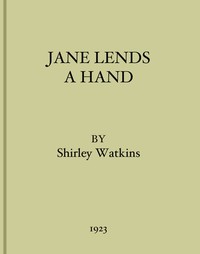
For Jane Lends A Hand — A Reader’s Guide, the stored edition analysis reports 74,546 words, 5 hr 25 min estimated reading time, and 21 detected text sections.
The text analysis averages about 16.2 words per sentence, while the detected sections provide another way to judge how the source is divided.
Project Gutenberg metadata also associates the work with “Artists -- Juvenile fiction,” connecting these edition facts with the source record’s subject description.
Explore this collection
These alternatives are selected using recorded categories and estimated reading time.
About 322 minutes
Technology Airships Imagined Futures
74,051 recorded words. 3 minutes difference from this book's estimate.
View Gutenberg source #30428About 337 minutes
Technology Airships Imagined Futures
77,431 recorded words. 12 minutes difference from this book's estimate.
View Gutenberg source #27690About 294 minutes
Technology Airships Imagined Futures
67,544 recorded words. 31 minutes difference from this book's estimate.
View Gutenberg source #34100Search stored excerpts and compare books → Choose by your preferences →
Choices use stored catalog measurements. Estimates vary with reading speed. A shared category is a catalog label, not a claim that two books have the same argument or literary quality.
Search reads excerpt text stored with this catalog and links to its associated Gutenberg record. The connection is stored in the site database; this tool does not recheck that every excerpt is word-for-word identical to that external record. Excerpt search does not cover every chapter and does not verify historical publication dates.
Catalog snapshot checked: 2026-09-25. Coverage: 99 public books, 99 available source excerpts.
Calculated from edition completeness, EPUB availability, text structure and catalogue metadata. Not a user rating.
Total of 100 points, scaled to a 2.5-5.0 range. Editions with an empty description or a missing EPUB file are not scored.
Public-domain source text
The source text is kept in the dedicated reader, separate from this catalogue record and its commentary.
Shirley Watkins' Jane Lends A Hand (1923) opens with a precise, sensory description of an October morning: Jane, still in bed, sniffs the frosty air and burrows into a patchwork quilt. The narrator immediately establishes a contrast between Jane's 'strong disinclination to leaving her cosy bed' and her father's Spartan rules against laziness and unpunctuality. This early passage sets up a pattern of gentle rebellion—Jane 'cheerfully paid her penalties with a sort of serene stoicism'—and introduces a narrative voice that is both observant and lightly ironic. The prose moves from intimate domestic detail to broader family dynamics, a shift in scale that recurs throughout the excerpts.
The narrator of Jane Lends A Hand maintains a consistent, slightly amused tone, even when describing conflict. Mr. Lambert's 'pet aversions' are listed with a knowing wink; his wife's private dissent is noted but not dramatized. This ironic distance allows the reader to see the gap between the family's stated rules and Jane's actual behavior. The voice is also economical: details like 'the ice formed a film in the water pitchers' do double duty, conveying both physical discomfort and the father's rigidity. The narrator rarely judges outright, instead letting actions and dialogue speak. When Jane later meddles in a romantic tangle, Paul calls her 'about the coolest —rascal I ever met,' a line that captures both his exasperation and the narrator's implicit approval of Jane's audacity.
The excerpts reveal two distinct paces. Early chapters linger on morning routines: Jane's slow awakening, the twins dressing 'inside of ten minutes,' the cold bedrooms. The prose is unhurried, matching the rhythm of a large household. Later scenes accelerate sharply. At the New Year's party, the narrative becomes crowded with action: 'wild tooting of horns,' 'showers of confetti,' and a rapid exchange of dialogue as Jane manipulates Mr. Sheridan into offering Lily a ride. The shift is marked by shorter sentences and a flurry of verbs—'worked his way,' 'strode off,' 'clamored.' This change in tempo mirrors Jane's own transition from passive observer to active instigator. The party sequence, with its overlapping conversations and quick entrances, contrasts with the quiet, frosty morning of the opening.
Watkins uses dialogue to advance plot and reveal character without lengthy exposition. Jane's exchange with Paul at the party is a case in point: her anxious confession ('I don't know what to do!') is met with his mocking advice to 'hike for the tall timber.' His laughter and her immediate decision to 'go down' show their contrasting temperaments—Paul cynical, Jane impulsive. Later, Jane's public remark about Mr. Buchanan's departure is a calculated piece of misdirection, delivered 'in a voice that it was impossible for Mr. Sheridan not to hear.' The dialogue here is layered: Jane speaks to Mr. Webster but aims her words at Sheridan. This indirect communication is a hallmark of the novel's social maneuvering. Even minor lines, like Sam Webster's 'I've got the sleigh already hitched up' (which is false), reveal character through bluff and bluster.
Readers approaching Jane Lends A Hand should attend to the interplay between Jane's serene exterior and her active, sometimes scheming, interior life. The novel's pace varies considerably—from the slow, sensory opening to the rapid-fire social comedy of the party—and these shifts often signal a change in Jane's role from observer to participant. The dialogue, especially in scenes of negotiation and misdirection, rewards close attention. Watkins' narrative voice, with its quiet irony and fondness for understatement, gives the story a lightness that belies its serious themes of family obligation and social expectation.
Reading Shirley Watkins' brisk dialogue in Jane Lends A Hand reminded me of another afternoon spent with a travel-worn heroine, her worries as much about people as perils. That same tug between quiet moments and sudden motion lives in Ruth Fielding Homeward Bound; Or, A Red Cross Worker's Ocean Perils — Reading Companion, though there the ocean does more of the talking. Funny how old books keep each other company.
Save your reaction, strongest insight, and memorable passage.