About 370 minutes
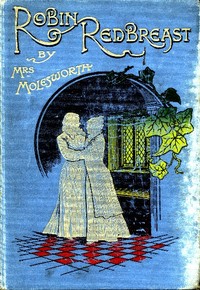
Robin Redbreast: A Story for Girls — Story, Setting & Ideas
Historical Psychological Social Fiction
85,083 recorded words. 0 minutes difference from this book's estimate.
View Gutenberg source #26085

The catalog record for Hollowdell Grange: Holiday Hours in a Country Home — A Reader’s Guide provides practical reading context through 85,000 words, 6 hr 10 min estimated reading time, and 9 detected text sections.
The text analysis averages about 31.8 words per sentence, while the detected sections provide another way to judge how the source is divided.
Project Gutenberg metadata also associates the work with “Vacations -- Juvenile fiction,” connecting these edition facts with the source record’s subject description.
Explore this collection
These alternatives are selected using recorded categories and estimated reading time.
About 370 minutes
Historical Psychological Social Fiction
85,083 recorded words. 0 minutes difference from this book's estimate.
View Gutenberg source #26085About 376 minutes
Historical Psychological Social Fiction
86,333 recorded words. 6 minutes difference from this book's estimate.
View Gutenberg source #32992About 384 minutes
Historical Psychological Social Fiction
88,297 recorded words. 14 minutes difference from this book's estimate.
View Gutenberg source #37207Search stored excerpts and compare books → Choose by your preferences →
Choices use stored catalog measurements. Estimates vary with reading speed. A shared category is a catalog label, not a claim that two books have the same argument or literary quality.
Search reads excerpt text stored with this catalog and links to its associated Gutenberg record. The connection is stored in the site database; this tool does not recheck that every excerpt is word-for-word identical to that external record. Excerpt search does not cover every chapter and does not verify historical publication dates.
Catalog snapshot checked: 2026-09-25. Coverage: 99 public books, 99 available source excerpts.
Calculated from edition completeness, EPUB availability, text structure and catalogue metadata. Not a user rating.
Total of 100 points, scaled to a 2.5-5.0 range. Editions with an empty description or a missing EPUB file are not scored.
Public-domain source text
The source text is kept in the dedicated reader, separate from this catalogue record and its commentary.
The opening chapter of Hollowdell Grange immerses the reader in a Midsummer heat so intense that even the station porter falls asleep and the dog cannot find shade. The prose lingers on the quivering air, drooping leaves, and sluggish river, where fish bask too lazily to snap at flies. Yet this drowsy landscape is immediately disrupted by the arrival of the train from London, bringing a boy—a 'fish out of water'—whose urban energy will collide with country rhythms. The narrative voice shifts between expansive description and close observation, noting the scythes' 'musical ringing sound' and the cows' futile tail-whisking. This tension between stillness and activity, between the natural world's indifference and human restlessness, sets the pattern for the holiday hours that follow.
The first chapter establishes a landscape saturated with heat and lethargy. The porter yawns 'very rudely and loudly'; the dog snaps at flies; the cows stand 'up to their knees in the muddy water.' Every detail reinforces a world slowed to a crawl. Into this torpor steps the London boy, whose very presence is framed as a disruption. The chapter title, 'A Fish out of Water,' signals the central contrast: the country is a place of instinctive, unhurried life, while the visitor brings a different tempo. The narrator dwells on the physical sensations of heat—the tarpaulins coming off 'all black upon Jem Barnes’s hands'—grounding the scene in tactile reality. This opening does not merely set a scene; it establishes a sensory baseline against which the boys' subsequent adventures will be measured.
Dick the dog appears repeatedly as a figure of uncontainable energy. He 'would far rather run after nothing at all than be tied-up,' and when chained, he must be 'ignominiously dragged to his chain, most likely by one ear.' The narrator compares his aversion to chains to that of 'any negro dragged from the burning coast of Africa'—a striking simile that underscores the theme of liberty. Dick's joy in pursuit, whether of rats or ducklings, contrasts with the enforced stillness of the hot afternoon. His 'canine fountain' shake after a pond dip and his 'deaf fits' when called back are comic but also pointed: the natural world resists domestication. The boys, too, oscillate between orderly activities (tea, wasp-nest preparation) and wild chases, mirroring Dick's dual life of kennel and freedom.
Fenn embeds detailed natural history observations into the story's fabric. The opening catalogue of fish—'fat old chub,' 'roach and dace'—is not mere decoration; it establishes the river as a site of hidden activity. Later, Mr. Inglis's entomological work, with 'tender wings of a butterfly showing every rude touch,' introduces a theme of careful versus careless handling of nature. The wasp-nest expedition is described with precision: the 'fumigating bellows,' the 'flour of brimstone,' the 'stiff yellow clay' kneaded to seal the hole. These passages serve a dual purpose: they advance the plot and model a methodical, respectful engagement with the outdoors. The narrator's voice, at once instructive and amused, treats the natural world as both a classroom and a playground, where observation and action are never entirely separate.
Readers approaching Hollowdell Grange will find a book that rewards attention to its physical details—the weight of clay, the buzz of a fly, the tug of a chain. The narrative moves between expansive description and focused incident, and its pleasures lie less in dramatic events than in the texture of country hours. Pay particular attention to the way Fenn uses the dog Dick as a barometer of mood and freedom; his chases and returns mark the rhythm of the boys' own liberty. The natural world here is not a backdrop but an active presence, full of small dramas that the narrator invites us to notice.
That rainy afternoon, I kept returning to the boys’ restless energy under Hullfedell’s heavy heat, and the dog Dick’s patient restraint—how freedom always seemed to need a boundary. Later, my mind drifted to another kind of tether: a science-adventure where suspense coiled inside a submarine’s tight metal walls. I found myself reaching for The Wailing Octopus: A Rick Brant Science-Adventure Story — A Reader’s Guide, the same quiet itch for contained discovery.
Use these questions to collect your thoughts before moving on.