About 257 minutes
Marjorie Dean, College Junior — Key Ideas to Explore
Historical Psychological Social Fiction
58,884 recorded words. 0 minutes difference from this book's estimate.
View Gutenberg source #37176
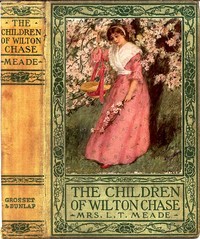
The source record for The Children of Wilton Chase — Themes and Context measures this digital text at 59,044 words, 4 hr 17 min estimated reading time, and 8 detected text sections.
The text analysis averages about 12.6 words per sentence, while the detected sections provide another way to judge how the source is divided.
Project Gutenberg metadata also associates the work with “Children -- Conduct of life -- Juvenile fiction,” connecting these edition facts with the source record’s subject description.
Explore this collection
These alternatives are selected using recorded categories and estimated reading time.
About 257 minutes
Historical Psychological Social Fiction
58,884 recorded words. 0 minutes difference from this book's estimate.
View Gutenberg source #37176About 254 minutes
Historical Psychological Social Fiction
58,244 recorded words. 3 minutes difference from this book's estimate.
View Gutenberg source #36671About 248 minutes
Historical Psychological Social Fiction
57,010 recorded words. 9 minutes difference from this book's estimate.
View Gutenberg source #33554Search stored excerpts and compare books → Choose by your preferences →
Choices use stored catalog measurements. Estimates vary with reading speed. A shared category is a catalog label, not a claim that two books have the same argument or literary quality.
Search reads excerpt text stored with this catalog and links to its associated Gutenberg record. The connection is stored in the site database; this tool does not recheck that every excerpt is word-for-word identical to that external record. Excerpt search does not cover every chapter and does not verify historical publication dates.
Catalog snapshot checked: 2026-09-25. Coverage: 99 public books, 99 available source excerpts.
Calculated from edition completeness, EPUB availability, text structure and catalogue metadata. Not a user rating.
Total of 100 points, scaled to a 2.5-5.0 range. Editions with an empty description or a missing EPUB file are not scored.
Public-domain source text
The source text is kept in the dedicated reader, separate from this catalogue record and its commentary.
From the opening chapter, L. T. Meade establishes a household governed by unspoken rules and visible tensions. The first exchange between Ermengarde and Marjorie reveals a deliberate contrast in diction: Ermengarde's passionate refusal—"I won't obey her!"—is met by Marjorie's measured, practical response. Meade uses this verbal opposition to sketch character quickly, without authorial commentary. The plain, sensible Marjorie "puckered up her brows" and speaks of not crying because it is "babyish," while Ermengarde's speech is marked by exclamation and self-dramatization. This pattern of contrasting voices recurs throughout the excerpts, suggesting that Meade builds moral drama less through plot than through the friction of how her characters speak to one another.
Meade assigns each sister a distinct verbal register that doubles as a moral signal. Ermengarde's lines are peppered with dramatic absolutes: "I won't do it!" and "I'll show her that I'm Miss Wilton." Her speech is performative, aimed at asserting status. Marjorie, by contrast, uses short, declarative sentences: "I don't cry" and "When Basil comes home——." The unfinished sentence hints at her reliance on an older brother's authority. Basil himself speaks in clipped, imperative phrases—"Now look here" and "Tell me the truth"—that carry the weight of the absent father and deceased mother. Meade thus uses dialogue as a shorthand for each character's role in the family hierarchy: the rebellious eldest, the dutiful middle child, and the stern surrogate parent.
The extended confrontation between Basil and Ermengarde in the schoolroom is Meade's most sustained dramatic set piece in the excerpts. She builds tension through physical staging: Basil holds a lamp that "fell on Ermengarde's face," turning the scene into a kind of interrogation. The dialogue moves in cycles—Basil demands truth, Ermengarde deflects with accusations about his "tone" or appeals to past affection ("O Basil, I have always loved you"). Meade inserts a crucial narrative pause: "This was Ermengarde's chance. For the moment the severe young judge before her was softened." The authorial intrusion signals a turning point, but Ermengarde lets "the golden moment pass." This structural choice—a hinge point explicitly named and then refused—gives the scene its moral weight.
Two concrete details anchor the mystery in the excerpts: the stopped pony-trap and the midnight visit to Susy Collins. Basil's accusation hinges on Ermengarde's physical reaction when "Collins stopped the pony-trap" that morning—a visible flinch that becomes evidence of a secret. Later, Ermengarde's return "close on midnight" confirms his suspicion. Meade does not explain the secret; instead, she lets the details accumulate through dialogue. The reader knows only that Susy Collins is "a girl my father has forbidden you to know" and that she is now ill. The secrecy is conveyed not through exposition but through the characters' obsessive return to these two moments—the trap stopping, the late hour—as if the story itself cannot move past them.
Though the mother never appears, her memory shapes every moral calculation in the excerpts. Ermengarde invokes her to challenge Basil: "Mother wouldn't have done it." Basil's response—"Hush, don't bring mother into this conversation"—reveals the wound beneath his authority. Meade uses the dead mother as a standard that no living character can meet. When Basil softens, it is because "a memory of his mother had done it." The mother's absence is not merely sentimental; it creates a vacuum of moral authority that Basil tries to fill, and that Ermengarde exploits. This dynamic is typical of Meade's fiction, where parental loss forces children into premature ethical choices, and where the dead parent becomes a silent judge of the living.
Readers attentive to Meade's craft will notice how she withholds full explanation, leaving the secret between Ermengarde and Susy Collins unresolved in the excerpts. The story's moral drama depends not on revelation but on the pressure that secrecy exerts on family relationships. Pay attention to how characters repeat certain phrases—"I won't," "tell the truth," "you have got to"—as these repetitions form a pattern of authority and resistance. Meade's dialogue rewards close reading: what is not said often matters as much as what is.
Reading the editorial notes on The Children of Wilton Chase, I kept thinking about how secrets ripple through a household long after they’re spoken. It made me remember another quiet study of those same undercurrents—Hoofbeats on the Turnpike — Background and Themes—where the road itself seems to carry what families leave unsaid. Both feel less like plots and more like listening at a door left slightly ajar.
Create a short personal record of your experience with this book.