About 257 minutes
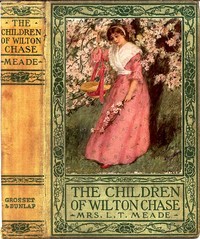
The Children of Wilton Chase — Themes and Context
Historical Psychological Social Fiction
59,044 recorded words. 0 minutes difference from this book's estimate.
View Gutenberg source #26409

Marjorie Dean, College Junior — Key Ideas to Explore can be approached with a clearer sense of reading commitment from its source measurements: 58,884 words, 4 hr 17 min estimated reading time, and 6 detected text sections.
The text analysis averages about 12.9 words per sentence, while the detected sections provide another way to judge how the source is divided.
Project Gutenberg metadata also associates the work with “Friendship -- Juvenile fiction,” connecting these edition facts with the source record’s subject description.
Explore this collection
These alternatives are selected using recorded categories and estimated reading time.
About 257 minutes
Historical Psychological Social Fiction
59,044 recorded words. 0 minutes difference from this book's estimate.
View Gutenberg source #26409About 254 minutes
Historical Psychological Social Fiction
58,244 recorded words. 3 minutes difference from this book's estimate.
View Gutenberg source #36671About 248 minutes
Historical Psychological Social Fiction
57,010 recorded words. 9 minutes difference from this book's estimate.
View Gutenberg source #33554Search stored excerpts and compare books → Choose by your preferences →
Choices use stored catalog measurements. Estimates vary with reading speed. A shared category is a catalog label, not a claim that two books have the same argument or literary quality.
Search reads excerpt text stored with this catalog and links to its associated Gutenberg record. The connection is stored in the site database; this tool does not recheck that every excerpt is word-for-word identical to that external record. Excerpt search does not cover every chapter and does not verify historical publication dates.
Catalog snapshot checked: 2026-09-25. Coverage: 99 public books, 99 available source excerpts.
Calculated from edition completeness, EPUB availability, text structure and catalogue metadata. Not a user rating.
Total of 100 points, scaled to a 2.5-5.0 range. Editions with an empty description or a missing EPUB file are not scored.
Public-domain source text
The source text is kept in the dedicated reader, separate from this catalogue record and its commentary.
The novel opens with a serenade rehearsal, where Phyllis Moore issues crisp commands: “Remember; we are to begin with the ‘Serenata.’” The dialogue is brisk and purposeful, establishing a tone of organized camaraderie. Chase uses musical terminology and stage directions to convey the girls’ collective energy, while character voices emerge through distinct phrasing—Blanche Scott’s casual “Leave it to Irish Leila” and Robin’s emphatic “so clever she is amazing” hint at individual personalities. The scene’s structure, moving from planning to execution, mirrors the book’s focus on collaborative projects.
Chase’s diction in dialogue reinforces the bonds among the Lookouts. Phrases like “cage anything she starts out to cage” and “your head is level, Jeremiah” blend colloquial warmth with playful nicknames. The author avoids formal speech, opting for a conversational tone that feels intimate. When Marjorie exclaims with an “exultant crow” and performs a “funny little dance of jubilation,” the narration matches the characters’ youthful exuberance. This consistent register—casual yet precise—creates a world where friendship is expressed through shared idioms and inside jokes.
Each character’s speech patterns reveal their role. Phyllis speaks in commands: “Be sure you have your instruments of torture with you.” Robin offers confident assurances: “Leila is a diplomat, and so clever she is amazing.” Jerry’s pragmatic plan for the beneficiary association is delivered in a logical, step-by-step manner: “Take a third of the proceeds and start the society.” Marjorie’s responses show her as a thoughtful leader, synthesizing ideas: “That’s a good plan. I’ll see Robin tomorrow.” Even minor characters like Elaine Hunter are distinguished by their “ready sympathy.” Chase uses dialogue not just to advance plot but to define personality through word choice and syntax.
Chase’s descriptions are spare but effective. The serenade scene is set with “Under the tree was a grassy mound. On this Elaine was invited to sit.” This minimal detail focuses attention on the characters’ actions. Later, Marjorie’s reaction to Miss Susanna’s letter is conveyed through a single vivid image: “Marjorie uttered a kind of exultant crow and performed a funny little dance of jubilation about the room.” The author avoids lengthy interior monologue, instead letting physical gestures—a dance, a critical eye, a tucked violin case—communicate emotion. This technique keeps the narrative brisk and visually clear.
Miss Susanna’s letter introduces a markedly different voice: formal, old-fashioned, and direct. “I have a curiosity to meet some of the young women you exalted to me” uses elevated diction (“exalted”) and a courteous imperative (“Do not trouble to answer”). This contrast with the girls’ colloquial speech highlights generational and social distance. The letter’s structure—a single paragraph with a clear invitation and a firm limit (“but no more”)—reveals Miss Susanna’s character as both gracious and authoritative. Chase’s choice to present this voice without mediation allows readers to infer the old lady’s personality from her own words.
Readers attentive to authorial choices will notice how Chase builds a social world through dialogue and gesture rather than exposition. The serenade, the show planning, and the tea invitation each demonstrate a preference for showing over telling. By attending to who speaks how and when, one can trace the novel’s underlying values: cooperation, resourcefulness, and the quiet diplomacy of friendship. These observations are drawn solely from the provided excerpts; the full book may deepen or complicate these patterns.
Reading the description of the serenade scene, I remembered sitting on a porch swing one June evening, another girl's quiet voice in my ear. That feeling of belonging, of being seen by a group, came back through Miss Susanna's letter too. Something in The Youngest Girl in the School — Background and Themes touched that same tender place about finding your people. Both books feel like old friends. The pages held that same hush, that warmth.
Save your reaction, strongest insight, and memorable passage.