About 257 minutes
The Children of Wilton Chase — Themes and Context
Historical Psychological Social Fiction
59,044 recorded words. 3 minutes difference from this book's estimate.
View Gutenberg source #26409
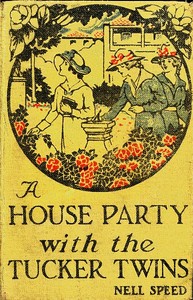
The catalog record for A House Party with the Tucker Twins — Edition Insights provides practical reading context through 58,244 words, 4 hr 14 min estimated reading time, and 8 detected text sections.
The text analysis averages about 16.2 words per sentence, while the detected sections provide another way to judge how the source is divided.
Project Gutenberg metadata also associates the work with “Twins -- Juvenile fiction,” connecting these edition facts with the source record’s subject description.
Explore this collection
These alternatives are selected using recorded categories and estimated reading time.
About 257 minutes
Historical Psychological Social Fiction
59,044 recorded words. 3 minutes difference from this book's estimate.
View Gutenberg source #26409About 257 minutes
Historical Psychological Social Fiction
58,884 recorded words. 3 minutes difference from this book's estimate.
View Gutenberg source #37176About 248 minutes
Historical Psychological Social Fiction
57,010 recorded words. 6 minutes difference from this book's estimate.
View Gutenberg source #33554Search stored excerpts and compare books → Choose by your preferences →
Choices use stored catalog measurements. Estimates vary with reading speed. A shared category is a catalog label, not a claim that two books have the same argument or literary quality.
Search reads excerpt text stored with this catalog and links to its associated Gutenberg record. The connection is stored in the site database; this tool does not recheck that every excerpt is word-for-word identical to that external record. Excerpt search does not cover every chapter and does not verify historical publication dates.
Catalog snapshot checked: 2026-09-25. Coverage: 99 public books, 99 available source excerpts.
Calculated from edition completeness, EPUB availability, text structure and catalogue metadata. Not a user rating.
Total of 100 points, scaled to a 2.5-5.0 range. Editions with an empty description or a missing EPUB file are not scored.
Public-domain source text
The source text is kept in the dedicated reader, separate from this catalogue record and its commentary.
Nell Speed opens A House Party with the Tucker Twins with a direct, conversational declaration: “There may be more fun than a house-party, but I doubt it.” The first-person narrator, Page Allison, immediately establishes the setting—a two-week gathering at General Price’s country home—and names the cast of friends, including the Tucker twins, Sleepy, Wink, and others. The structure relies on episodic movement: from the launch to a skiff, from the country store to a picnic, from “Big Meetin’” to a circus. Speed frequently shifts scenes through water travel, using boats and canoes to transport characters between locations. These transitions are not merely functional; they create a rhythm of departure and arrival that mirrors the social ebb and flow of the party itself.
Page Allison narrates in the first person, but she is not a passive observer. She reports dialogue, describes scenes, and occasionally reveals her own insecurities—such as her freckled nose, which she calls “a great annoyance.” When Zebedee Tucker asks why she looked crestfallen, she blushes and admits she wanted to stay under the awning to protect her freckles. This moment is typical: Speed uses Page’s self-consciousness to add texture to group interactions. The narrator also editorializes, calling Annie Pore’s father “characteristically selfish and stubborn” and noting that Sleepy’s wealth “had a softening effect on character.” These judgments give the reader a clear sense of Page’s loyalties and biases, without breaking the informal tone.
The novel’s scenes are linked by physical travel, especially by water. In the excerpts, characters move from a launch to a “little brown boat,” from a canoe to a skiff. The chapter titles reinforce this pattern: “The Country Store,” “The Circus,” “The Picnic,” “The Shopper-Roon.” Each new location brings a different activity—selling goods, watching a performance, eating outdoors. Speed describes these transitions with specific details: the “picturesque red skiff,” the “purple calico” dress of Aunt Milly, the “bright plaid head handkerchief.” The movement is not aimless; it creates a sense of progression through the two-week party, with each outing offering new opportunities for conversation and mild conflict.
Speed returns to a few physical and social traits throughout the excerpts. Page’s freckles are mentioned twice, once in dialogue and once in her internal complaint. Sleepy’s weight is described in detail: “two hundred and twenty pounds,” “six feet two inches,” “muscles were hard as iron.” His wealth is also emphasized: “cursed with money,” “never been denied a single thing.” These repeated details serve as shorthand for character. The freckles mark Page as self-conscious; Sleepy’s size and money define his role as the easygoing, unambitious friend. Speed does not rely on elaborate psychological description; instead, she lets these recurring physical and economic markers do the work.
The house-party format allows Speed to create a collective voice. Characters speak in overlapping dialogue, teasing each other about weight, freckles, and romantic interests. When Sleepy is told to “vamoose” because he is “as big as any two other passengers,” the group laughs. When Page blushes about her freckles, Zebedee responds gently. The group functions as a chorus, reinforcing social norms and providing comic relief. Speed also uses letters at the end of the book—from Annie Pore, George Massie, and Page—to shift perspective. This epistolary turn suggests that the group’s dynamics extend beyond the party itself, though the excerpts do not reveal the letters’ content.
Readers should pay attention to how Speed uses the house-party structure to contain multiple small adventures. The novel does not build toward a single climax; instead, it accumulates moments of social negotiation, from storekeeping to ghost stories. The recurring images of boats and freckles are not symbols to decode but anchors that keep the story grounded in the physical world of early twentieth-century rural Virginia. Approach the book as a series of linked episodes, each revealing a little more about how these young people talk, tease, and care for one another.
Reading about the Tucker twins' lazy river afternoons brought back my own summers of long, aimless porch swings—the ease of it, the unspoken weight of not yet knowing what to do with myself. Dostoevsky's restless characters ache with the same tension, though their idleness burns darker. One memory is golden, the other gray. The Brothers Karamazov — Edition Insights reminded me that comfort and disquiet are often the same quiet room, just different windows.
Your answers remain private and are stored only in this browser.