About 216 minutes
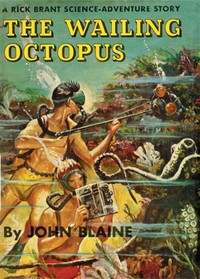
The Wailing Octopus: A Rick Brant Science-Adventure Story — A Reader’s Guide
Historical Psychological Social Fiction
49,626 recorded words. 6 minutes difference from this book's estimate.
View Gutenberg source #31495
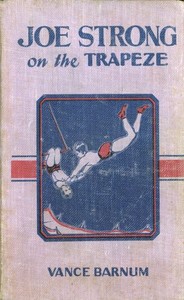
Before opening Joe Strong on the Trapeze; Or, The Daring Feats of a Young Circus Performer — A Closer Reading, the edition data offers a quick orientation: 51,013 words, 3 hr 42 min estimated reading time, and 7 detected text sections.
The text analysis averages about 13.3 words per sentence, while the detected sections provide another way to judge how the source is divided.
Project Gutenberg metadata also associates the work with “Boys -- Juvenile fiction,” connecting these edition facts with the source record’s subject description.
Explore this collection
These alternatives are selected using recorded categories and estimated reading time.
About 216 minutes
Historical Psychological Social Fiction
49,626 recorded words. 6 minutes difference from this book's estimate.
View Gutenberg source #31495About 215 minutes
Historical Psychological Social Fiction
49,282 recorded words. 7 minutes difference from this book's estimate.
View Gutenberg source #34927About 207 minutes
Historical Psychological Social Fiction
47,435 recorded words. 15 minutes difference from this book's estimate.
View Gutenberg source #37271Search stored excerpts and compare books → Choose by your preferences →
Choices use stored catalog measurements. Estimates vary with reading speed. A shared category is a catalog label, not a claim that two books have the same argument or literary quality.
Search reads excerpt text stored with this catalog and links to its associated Gutenberg record. The connection is stored in the site database; this tool does not recheck that every excerpt is word-for-word identical to that external record. Excerpt search does not cover every chapter and does not verify historical publication dates.
Catalog snapshot checked: 2026-09-25. Coverage: 99 public books, 99 available source excerpts.
Calculated from edition completeness, EPUB availability, text structure and catalogue metadata. Not a user rating.
Total of 100 points, scaled to a 2.5-5.0 range. Editions with an empty description or a missing EPUB file are not scored.
Public-domain source text
The source text is kept in the dedicated reader, separate from this catalogue record and its commentary.
The excerpts from Joe Strong on the Trapeze open not with a circus ring but with a stage magic act: Professor Alonzo Rosello and Joe performing a disappearance trick using a black cloth and a chair over an unbroken newspaper. This initial scene, with its precise description of apparatus and audience applause, establishes a tone of technical craft rather than simple adventure. The catalog subjects list 'Boys -- Juvenile fiction' and 'Circus performers -- Juvenile fiction,' but the text itself dwells on the mechanics of illusion and the logistics of performance—how a trick is set up, how an electric current is relied upon, how a sheet of paper is exhibited as proof. The circus setting emerges gradually, and the excerpts suggest that the book's interest lies less in generic 'boyhood' than in the specific, often precarious work of a young performer.
The excerpts show Joe Strong moving fluidly between stage magic and circus acrobatics. In the opening chapter, he is a magician's assistant; later, he performs gymnastic work high in a tent and leaps from a platform into a life net. The text does not mark a sharp break between these roles. Instead, it treats both as requiring the same kind of practiced skill and quick judgment. When a horse bolts toward Helen Morton's ring, Joe drops from his trapeze platform into the net, bounces, and springs onto the animal's back—all in a single, calculated motion. The narration emphasizes his ability to 'judge the distance correctly' and act 'in a second.' This continuity between magic and circus work suggests that the book's organizing principle is not a change of career but a broadening of performance contexts. The catalog subject 'Aerialists -- Juvenile fiction' accurately names one element, but the excerpts show that aerial work is embedded in a larger performance ecology that includes magic, animal handling, and tent maintenance.
A substantial portion of the excerpts describes a storm threatening the circus tent. The text details how rain softens soil, loosening tent pegs, while wet ropes shrink and pull harder on poles. The ringmaster orders pegs driven deeper and ropes eased off. The band keeps playing to subdue panic. When a tent pole snaps, extra poles are quickly placed. This passage is notable for its technical specificity: the reader learns exactly why a tent becomes unstable in rain and how circus workers respond. The catalog subjects do not include 'storms' or 'tent rigging,' yet these elements occupy more narrative space than any single performance. The excerpts treat the tent as a fragile structure requiring constant attention, and Joe's heroism is as much about driving pegs and attaching ropes as about catching a horse. The book, based on these excerpts, appears to be as interested in the material conditions of circus life as in the daring feats promised by the title.
The catalog subjects list only male-coded terms—'Boys,' 'Circus performers,' 'Aerialists'—but the excerpts introduce a female performer, Helen Morton, who works with a horse named Rosebud. Joe's intervention to prevent a collision with Helen's ring is a key action sequence. Yet the excerpts provide no description of Helen's act or her character beyond her name and her horse. She is a figure in need of rescue, not an agent. This discrepancy between the catalog's gender-neutral 'Circus performers' and the text's apparent gender division raises questions about the book's treatment of female performers. The excerpts are too brief to determine whether Helen appears elsewhere as a developed character, but her presence complicates the catalog's implicit assumption that the story is solely about boys. Readers should note that the catalog subjects reflect the series' marketing to boys rather than the full range of characters who appear in the narrative.
The excerpts from Joe Strong on the Trapeze reward attention to the practical details of performance and survival. Readers interested in the mechanics of early 20th-century circus work—how tents were secured, how magic tricks were staged, how performers coordinated under pressure—will find more substance here than in the generic 'daring feats' promised by the subtitle. The catalog subjects provide a starting point, but the text itself offers a richer, more specific picture of life in a traveling show.
I’ve lingered on Joe Strong’s careful trapeze knots, his quiet respect for wind and weather. That same steady patience hums through another shelf-neighbor, the camp-fire girl who builds her world from small, deliberate acts. They never met, yet share a currency of preparedness and trust. Odd, how two such different covers can hold the same warm heartbeat. Winona of the Camp Fire — Themes and Context rests beside it now, like an old friend nodding across the aisle.
Your answers remain private and are stored only in this browser.