About 216 minutes
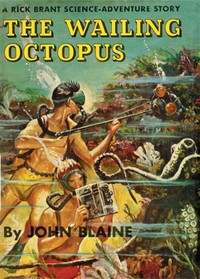
The Wailing Octopus: A Rick Brant Science-Adventure Story — A Reader’s Guide
Historical Psychological Social Fiction
49,626 recorded words. 1 minutes difference from this book's estimate.
View Gutenberg source #31495
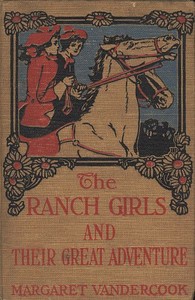
The Ranch Girls and Their Great Adventure — Edition Insights can be approached with a clearer sense of reading commitment from its source measurements: 49,282 words, 3 hr 35 min estimated reading time, and 6 detected text sections.
The text analysis averages about 18.5 words per sentence, while the detected sections provide another way to judge how the source is divided.
Project Gutenberg metadata also associates the work with “Family -- Fiction,” connecting these edition facts with the source record’s subject description.
Explore this collection
These alternatives are selected using recorded categories and estimated reading time.
About 216 minutes
Historical Psychological Social Fiction
49,626 recorded words. 1 minutes difference from this book's estimate.
View Gutenberg source #31495About 222 minutes
Historical Psychological Social Fiction
51,013 recorded words. 7 minutes difference from this book's estimate.
View Gutenberg source #28642About 207 minutes
Historical Psychological Social Fiction
47,435 recorded words. 8 minutes difference from this book's estimate.
View Gutenberg source #37271Search stored excerpts and compare books → Choose by your preferences →
Choices use stored catalog measurements. Estimates vary with reading speed. A shared category is a catalog label, not a claim that two books have the same argument or literary quality.
Search reads excerpt text stored with this catalog and links to its associated Gutenberg record. The connection is stored in the site database; this tool does not recheck that every excerpt is word-for-word identical to that external record. Excerpt search does not cover every chapter and does not verify historical publication dates.
Catalog snapshot checked: 2026-09-25. Coverage: 99 public books, 99 available source excerpts.
Calculated from edition completeness, EPUB availability, text structure and catalogue metadata. Not a user rating.
Total of 100 points, scaled to a 2.5-5.0 range. Editions with an empty description or a missing EPUB file are not scored.
Public-domain source text
The source text is kept in the dedicated reader, separate from this catalogue record and its commentary.
From its first sentence, The Ranch Girls and Their Great Adventure establishes a deliberate contrast between American and English sensibilities. The deep-rutted lane bordered with high box hedges, the sloping park with century-old trees, and the field of meadow grass and scarlet poppies immediately ground the narrative in a specific English July. The dialogue that follows—between Olive and an unnamed companion—explicitly frames this setting as a foil to New York's turmoil, yet the companion's reply undercuts the notion of peace, suggesting that Americans fail to grasp England's true character. This early exchange reveals Vandercook's method: she uses dialogue not merely to advance plot but to delineate personality and cultural perspective.
Vandercook's word choices in the opening paragraph are precise and sensory. The lane is “deep-rutted,” the hedges “high,” the park “sloping,” and the trees “a century old.” These details do more than set a scene; they signal a narrator attentive to the physical markers of age and tradition. The field is filled with “meadow grass and scarlet poppies,” a combination that evokes both pastoral calm and vivid color. Yet the dialogue immediately complicates this imagery. Olive's exclamation—“In all the world there is nothing so peaceful as this English country”—is met with a skeptical reply: “I don't know that I agree with you.” The companion's use of the word “turmoil” for New York and her characterization of Jim Colter as “half asleep” in England suggest a critique of American restlessness. Vandercook thus uses diction to establish a tension between surface tranquility and underlying cultural difference.
The excerpt from Chapter I demonstrates how Vandercook employs dialogue to reveal character without explicit narration. Olive's speech is lyrical and impressionistic—“It is like another world”—while her companion's responses are measured and analytical. The companion's smile before replying, her use of “beloved westerners,” and her insistence that Americans “don't understand England and the English” all point to a character who values nuance and is perhaps more at home in England than in America. Later, in the scene concerning Captain MacDonnell's letter, dialogue becomes a vehicle for moral deliberation. Jack's quiet firmness—“I think you are mistaken, Frank”—contrasts with Frank's nervous pacing and indecision. Vandercook lets the characters' words and small actions—Jack sitting “leaning thoughtfully forward and resting her chin in the palm of her hand”—convey their inner states more effectively than any authorial summary.
Vandercook often describes emotional states indirectly, through physical details and gestures. When Jack appears hopeful while others are anxious, the text notes that “Frieda at least realized that courage was her sister's strongest characteristic.” The description of Jack's gallantry—“the carriage of her head; the look in her eyes”—is offered not as authorial assertion but as Frieda's perception. Similarly, Frank's worry is shown through his actions: he “got up and began walking nervously up and down his room.” The letter scene relies on visual cues: Jack sees Frank “first look surprised and then saw him flush and at last his expression hardened curiously.” Vandercook trusts her readers to infer emotion from these observable signs, a technique that aligns with the novel's emphasis on restraint and understatement.
The narrative structure in the opening chapters employs interruption as a device. The peaceful description of the English lane is immediately followed by dialogue that questions that peace. Later, the tense discussion of Captain MacDonnell's letter is broken by the arrival of neighbors after dinner. These interruptions create a rhythm of expectation and disruption. Vandercook also uses chapter titles that hint at conflict—“Frieda's Rift,” “The Voice,” “An Apparition”—while the content often delays direct confrontation. The letter itself is a withheld secret: Frank must decide whether to open it, and the reader is kept in suspense. This structural choice mirrors the characters' own hesitations and reflects a broader theme of delayed revelation. The excerpts suggest that Vandercook is more interested in the process of decision-making than in its immediate outcome.
Readers attentive to Vandercook's craft will notice how she builds character through what is left unsaid. The dialogue's undercurrents, the careful physical descriptions, and the deliberate pacing all reward close reading. This novel, as the early chapters indicate, is less about action than about the quiet tensions between people and the landscapes they inhabit.
There’s something comforting in how Margaret Vandercook lets the English countryside speak quietly through her girls, each voice a small指纹 of character. It reminded me of the way an old paperback, The Wailing Octopus: A Rick Brant Science-Adventure Story — A Reader’s Guide, once made me linger on a single line of dialogue, the same unhurried trust in detail. Those moments feel like a hand reaching back through years.
Save your reaction, strongest insight, and memorable passage.