About 370 minutes
Hollowdell Grange: Holiday Hours in a Country Home — A Reader’s Guide
Historical Psychological Social Fiction
85,000 recorded words. 0 minutes difference from this book's estimate.
View Gutenberg source #24918
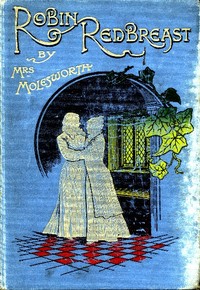
The catalog record for Robin Redbreast: A Story for Girls — Story, Setting & Ideas provides practical reading context through 85,083 words, 6 hr 10 min estimated reading time, and 10 detected text sections.
The text analysis averages about 17.7 words per sentence, while the detected sections provide another way to judge how the source is divided.
Project Gutenberg metadata also associates the work with “Conduct of life -- Juvenile fiction,” connecting these edition facts with the source record’s subject description.
Explore this collection
These alternatives are selected using recorded categories and estimated reading time.
About 370 minutes
Historical Psychological Social Fiction
85,000 recorded words. 0 minutes difference from this book's estimate.
View Gutenberg source #24918About 376 minutes
Historical Psychological Social Fiction
86,333 recorded words. 6 minutes difference from this book's estimate.
View Gutenberg source #32992About 384 minutes
Historical Psychological Social Fiction
88,297 recorded words. 14 minutes difference from this book's estimate.
View Gutenberg source #37207Search stored excerpts and compare books → Choose by your preferences →
Choices use stored catalog measurements. Estimates vary with reading speed. A shared category is a catalog label, not a claim that two books have the same argument or literary quality.
Search reads excerpt text stored with this catalog and links to its associated Gutenberg record. The connection is stored in the site database; this tool does not recheck that every excerpt is word-for-word identical to that external record. Excerpt search does not cover every chapter and does not verify historical publication dates.
Catalog snapshot checked: 2026-09-25. Coverage: 99 public books, 99 available source excerpts.
Calculated from edition completeness, EPUB availability, text structure and catalogue metadata. Not a user rating.
Total of 100 points, scaled to a 2.5-5.0 range. Editions with an empty description or a missing EPUB file are not scored.
Public-domain source text
The source text is kept in the dedicated reader, separate from this catalogue record and its commentary.
The house in the lane is introduced with a peculiar liveliness: its round windows are described as “two bright, watchful eyes,” and the front wall, ivy-grown, resembles a hedge. This personification of the building sets a tone of attentive domesticity that runs through the novel. The name “Robin Redbreast” is traced to a former inn sign, grounding the title in a tangible, local history rather than mere sentiment. Such architectural details—the red front, the ivy-covered wings, the deep porch—are not static description; they establish a setting that feels inhabited and watchful, a silent participant in the story.
The opening chapter lingers on the house’s physical features: the “out-jutting front,” the “curious round windows,” the ivy that makes the wall “more like a hedge.” These details do more than paint a picture. The windows that “caught and reflected the sunset glow” and seemed like “bright, watchful eyes” give the building a quasi-human presence. Later, the narrative moves inside to Ivy Lodge, the school, and other interiors, but the initial house remains a reference point. The contrast between the exposed red front and the ivy-covered wings mirrors the tension between openness and concealment that characters like Frances and Mrs. Harper navigate. The house is not merely a backdrop; its structure—spreading out “wonderfully at the back”—suggests hidden depths, much like the family secrets gradually revealed.
The robin appears first in the house’s name and origin as an inn sign. But the bird motif extends beyond the title. Characters are associated with birds indirectly: Camilla is “calm, gentle,” while Margaret is “nervous, anxious-minded,” and the robin’s traditional qualities of cheerfulness and resilience contrast with the Harper family’s anxieties. The phrase “Robin Redbreast” is used as a nickname or reference within the story, as when Camilla worries that news might “come round in some disagreeable way to—Robin Redbreast.” This suggests the robin functions as a code for a sensitive matter, perhaps a person or a secret. The bird imagery thus weaves through the narrative, linking the house’s history to the characters’ emotional states.
The story shifts frequently between the Harper home, the school where Frances receives letters, and the “little bathing-place” Southcliff. These movements are often triggered by correspondence: a letter from Aunt Flora arrives at breakfast, bringing news that connects the Lyles to the Mildmays. The narrative follows the mail’s trajectory—from London to Southcliff to Thetford—creating a geography of anxiety. Mrs. Harper’s face brightens after reading the letter, but the underlying worry about Captain Harper’s health persists. The physical distances between characters (Colin in the army, Fitz at home with a broken leg, Frances at school) are bridged by letters, yet the gaps also heighten tension. The novel’s structure relies on these movements to reveal information gradually, parceled out through correspondence and conversation.
Several small, repeated details build a pattern of apprehension. Camilla’s “apprehensiveness which reiterated experience of ill-tidings begets” is explicitly named. Fitz’s attempt at a joke about breaking his leg again is met with a “not very successful” tone, underlining the family’s strained cheerfulness. Mrs. Harper’s firmness and determination are contrasted with her daughters’ nervousness. The “terrible suspicion” about Captain Harper’s health is kept secret until Fitz is well, showing how the family staggers bad news. Even the phrase “it was only an interlude” signals a cycle of hope and setback. These recurring emotional beats—hope, dread, temporary relief—give the narrative a rhythmic structure that mirrors the robin’s alternating song and silence.
Readers attentive to the novel’s architecture and bird imagery will notice how Mrs. Molesworth uses the house and the robin as anchors for the family’s emotional journey. The frequent shifts in setting, driven by letters and news, create a sense of precariousness. Rather than a straightforward domestic tale, Robin Redbreast builds its tension through these structural choices, inviting the reader to watch for the next piece of correspondence or the next glimpse of the old inn sign.
Some houses hold their secrets in staircases and birdsong, as Mrs. Molesworth knew so well. Reading this, I thought of another quiet girl, watching from the schoolroom's edge, whose story also rests on what families leave unsaid. Both books understand that patience, not plot, unlocks a hidden history. There’s a gentle kinship there—The Youngest Girl in the School — Background and Themes—like finding a familiar window lit in a neighbouring house.
A brief reflection can help important ideas stay with you longer.