About 224 minutes
Frontier Boys on the Coast; Or, In the Pirate's Power — Key Ideas to Explore
Exploration Survival Adventure Tales
51,413 recorded words. 3 minutes difference from this book's estimate.
View Gutenberg source #25473
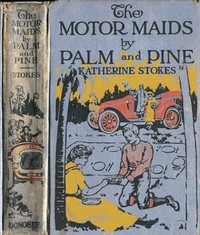
For The Motor Maids by Palm and Pine — Reading Notes, the stored edition analysis reports 50,795 words, 3 hr 41 min estimated reading time, and 6 detected text sections.
The text analysis averages about 14.7 words per sentence, while the detected sections provide another way to judge how the source is divided.
Project Gutenberg metadata also associates the work with “Voyages and travels -- Juvenile fiction,” connecting these edition facts with the source record’s subject description.
Explore this collection
These alternatives are selected using recorded categories and estimated reading time.
About 224 minutes
Exploration Survival Adventure Tales
51,413 recorded words. 3 minutes difference from this book's estimate.
View Gutenberg source #25473About 225 minutes
Exploration Survival Adventure Tales
51,566 recorded words. 4 minutes difference from this book's estimate.
View Gutenberg source #32270About 228 minutes
Exploration Survival Adventure Tales
52,219 recorded words. 7 minutes difference from this book's estimate.
View Gutenberg source #34728Search stored excerpts and compare books → Choose by your preferences →
Choices use stored catalog measurements. Estimates vary with reading speed. A shared category is a catalog label, not a claim that two books have the same argument or literary quality.
Search reads excerpt text stored with this catalog and links to its associated Gutenberg record. The connection is stored in the site database; this tool does not recheck that every excerpt is word-for-word identical to that external record. Excerpt search does not cover every chapter and does not verify historical publication dates.
Catalog snapshot checked: 2026-09-25. Coverage: 99 public books, 99 available source excerpts.
Calculated from edition completeness, EPUB availability, text structure and catalogue metadata. Not a user rating.
Total of 100 points, scaled to a 2.5-5.0 range. Editions with an empty description or a missing EPUB file are not scored.
Public-domain source text
The source text is kept in the dedicated reader, separate from this catalogue record and its commentary.
The Motor Maids by Palm and Pine opens with a father sending his daughter and her friends on an Easter trip to Florida, accompanied by their automobile, the Comet. The story quickly introduces a tangled secret: two young men named Edward have exchanged places, one taking the other's identity for reasons initially described as "for fun." The narrative voice blends breezy adventure with moments of moral tension, as characters grapple with loyalty, fairness, and the consequences of deception.
The central puzzle of the excerpts involves a double identity. Billie Campbell knows that Edward l'Estrange and Edward Paxton have swapped roles, but she cannot reveal why. The other girls sense something amiss: Elinor confronts Billie with the whispered accusation, "They've changed places. But why did they do it?" Billie's reply—"For fun, at first"—suggests a prank that has grown serious. The narrative withholds the full reason, leaving readers to infer that something has prevented Edward l'Estrange from returning. The tension is heightened by small details: Edward Paxton forgets he is not supposed to know about music, and Billie defends the absent Edward's fairness without evidence. This secrecy drives the early chapters, creating a mystery that the girls must unravel.
The automobile named the Comet is more than transportation; it is a catalyst for the plot and a marker of the girls' independence. Mr. Campbell's letter personifies the car, writing that "the Comet needs a change of air" and comparing it to a "thoroughbred horse." The vehicle enables the journey south, linking the girls to their absent father and to the adventure ahead. In the excerpts, the Comet is fetched from a garage, prepared for a motor outing, and treated with care. Its presence contrasts with the static, secret-laden hotel life. The car represents mobility and agency, yet it also ties the girls to the adult world of money and permission—Mr. Campbell sends checks and arranges travel, while the girls must ask for the car. This tension between freedom and oversight runs through the opening chapters.
The four friends—Billie, Nancy, Mary, and Elinor—are distinguished by their reactions to the secret. Nancy is openly curious, declaring she "shall burst" if she does not find out. Mary is practical, calling the others back from their whispered argument. Elinor is introspective, feeling "hurt with Billie for no good reason" and ashamed of her own bitterness. Billie, the leader, is torn between her promise and her friends' trust. Their dialogue reveals a hierarchy: Billie holds the secret, the others press or withdraw. The author uses small physical actions—a "friendly shake," a "little low cry"—to convey emotion without overstatement. This group dynamic, with its shifting alliances and unspoken resentments, gives the story a psychological layer beneath the sunny Florida setting.
Readers should pay attention to the contrast between the characters' spoken words and their private thoughts, especially in scenes where the secret is hinted at but not explained. The Florida setting—palm trees, boats, and orange groves—serves as a backdrop that sometimes distracts from the moral questions at the story's heart. The Motor Maids by Palm and Pine rewards those who notice how the author uses the Comet and the two Edwards to explore themes of identity, loyalty, and the cost of keeping promises.
The Motor Maids' Florida sunshine feels a world away from the mountains I once loved in Katy Did, yet both stories share a quiet ache for girlhood’s fading freedom. There’s a particular melancholy in the Comet’s open road, knowing social rules await. That same bittersweet feeling lingers in In the High Valley Being the fifth and last volume of the Katy Did series — Story, Setting & Ideas, where the valley closes in, gentler but just as final.
Build a private reading journal entry for this title.