About 200 minutes
Hoofbeats on the Turnpike — Background and Themes
Historical Psychological Social Fiction
45,800 recorded words. 1 minutes difference from this book's estimate.
View Gutenberg source #34691
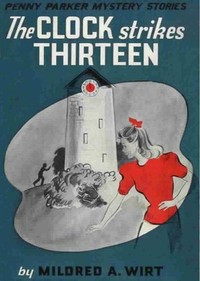
The source record for The Clock Strikes Thirteen — Inside the Classic measures this digital text at 45,697 words, 3 hr 19 min estimated reading time, and 7 detected text sections.
The text analysis averages about 11.0 words per sentence, while the detected sections provide another way to judge how the source is divided.
Project Gutenberg metadata also associates the work with “Adventure and adventurers -- Juvenile fiction,” connecting these edition facts with the source record’s subject description.
Explore this collection
These alternatives are selected using recorded categories and estimated reading time.
About 200 minutes
Historical Psychological Social Fiction
45,800 recorded words. 1 minutes difference from this book's estimate.
View Gutenberg source #34691About 207 minutes
Historical Psychological Social Fiction
47,435 recorded words. 8 minutes difference from this book's estimate.
View Gutenberg source #37271About 185 minutes
Historical Psychological Social Fiction
42,526 recorded words. 14 minutes difference from this book's estimate.
View Gutenberg source #34832Search stored excerpts and compare books → Choose by your preferences →
Choices use stored catalog measurements. Estimates vary with reading speed. A shared category is a catalog label, not a claim that two books have the same argument or literary quality.
Search reads excerpt text stored with this catalog and links to its associated Gutenberg record. The connection is stored in the site database; this tool does not recheck that every excerpt is word-for-word identical to that external record. Excerpt search does not cover every chapter and does not verify historical publication dates.
Catalog snapshot checked: 2026-09-25. Coverage: 99 public books, 99 available source excerpts.
Calculated from edition completeness, EPUB availability, text structure and catalogue metadata. Not a user rating.
Total of 100 points, scaled to a 2.5-5.0 range. Editions with an empty description or a missing EPUB file are not scored.
Public-domain source text
The source text is kept in the dedicated reader, separate from this catalogue record and its commentary.
The Clock Strikes Thirteen opens in the newsroom of the Riverview Star, where Penny Parker’s rubber heels make no sound on the freshly scrubbed floor. This initial setting establishes a pattern of movement between professional and domestic spaces that structures the narrative. The story moves from the newspaper office to a bell maker’s cottage, an orphans’ home, and the road to Claymore, each shift carrying its own atmosphere and set of concerns. Wirt uses these transitions to balance the investigative plot with scenes of everyday life, creating a rhythm that alternates between tension and respite.
The narrative frequently shifts between the newsroom, where Penny gathers information, and more personal settings like the Sidell home or Mr. McGuire’s cottage. These transitions are often abrupt, as when Penny leaves the office to drive to Claymore or when Adelle runs away from the orphans’ home to the bell maker’s house. The movement is not merely geographical; it reflects a change in tone. The newsroom scenes are brisk and purposeful, while domestic scenes allow for quieter character interactions. For instance, the description of Mr. McGuire preparing lunch and Penny washing Adelle’s hair slows the pace considerably, offering a contrast to the earlier urgency of the newspaper deadline.
The title’s promise of a clock striking thirteen is echoed in several scenes. The bell maker’s cottage, with its association with timepieces, becomes a central location. The old man’s remark that he would like a little girl “if I had my old job back” ties his identity to his craft. The orphans’ home and the newspaper office both operate on schedules, and characters frequently refer to time: “curfew never rings for me,” Penny says, while Adelle’s plea to stay with Mr. McGuire is framed as a desire for permanence. The extra stroke of the clock—thirteen instead of twelve—suggests something out of order, a disruption that the mystery may resolve.
Wirt’s dialogue is marked by quick exchanges and a colloquial tone. Penny’s banter with her father—“A girl has to have some amusement, you know”—establishes her as confident and playful. Adelle’s speech is more direct and pleading: “I’m never going back, even if I freeze and starve!” The contrast between the two characters’ voices is sharp. Penny uses humor to deflect tension, while Adelle’s earnestness exposes vulnerability. The dialogue often carries the plot forward, as when Penny learns about the orphans’ home or when Mr. McGuire hesitates to adopt Adelle. These conversations reveal character without lengthy exposition.
The mystery unfolds in a series of scenes that alternate between investigation and interruption. Penny’s plan to attend the theatre in Claymore is derailed by Adelle’s disappearance; her search for the child leads to the bell maker’s cottage. This pattern of setting a goal and then being diverted by a new development keeps the narrative moving. The chapter titles reflect this structure: “Sandwiches for Two” gives way to “Night Riders,” “A Black Hood,” and “A New Caretaker.” Each chapter introduces a fresh complication, often through a chance encounter or a sudden decision. The result is a story that feels episodic, with each segment building on the last.
Readers attentive to the interplay of setting and character will find that Wirt uses the physical movement between locations to mirror the emotional shifts in the story. The bell maker’s cottage, the newsroom, and the road all carry symbolic weight. The clock that strikes thirteen is not merely a plot device but a motif that ties together themes of time, work, and belonging. This edition invites a careful reading of how these elements work together to create a cohesive mystery.
I’ve always loved how The Clock Strikes Thirteen lets its heroine move between newsroom clocks and quiet country hours, time itself a gentle detective. It reminds me of a stranger kinship—the earnest, bumbling research of Bouvard and Pécuchet: A Tragi-comic Novel of Bourgeois Life, part 1 — Background and Themes, where investigation becomes a lifelong, hopeful stumble. Both know mystery lives in ordinary routines.
Save your reaction, strongest insight, and memorable passage.